Wait, What?
Tori Amos Does Christmas, Joy Electric Does Covers

Good news out of Tennessee: The Choir is working on a new album.

If you’ve read this column for any length of time, you know of my sometimes irrational love for this band. For more than 25 years, the Choir has been crafting some of the finest spiritual dream-pop you’ll find anywhere. I first started listening with 1990’s Circle Slide, an album that has grown in stature for me with each passing year. If you only hear one Choir album, it should be that one.

But if you hear two, check out their last release, 2005’s O How the Mighty Have Fallen. The Choir welcomed Hammock guitarist Marc Byrd into their ranks, and delivered their finest long-player since Circle Slide. I was doubly pleased, since every Choir album these days carries with it the threat that it will be the last, and Mighty would have been a good way to go out. I’m glad to see it isn’t the band’s swan song, though, and delighted at the prospect of new Choir tunes in 2010.

Check the band out here. It promises to be a very good year for fans of the spiritual pop corner of the music world: Choir members Steve Hindalong and Derri Daugherty are also in the Lost Dogs, and their long-awaited Route 66 album and movie project should see release next year. Also, Mike Roe will hopefully give us his new album, his first all-original platter after two solid collections of old gospel tunes. Expect much rejoicing.

* * * * *

It’s been six months since Doctor Who graced our television screens, and it’s been longer than that since I’ve talked about it here. But this weekend’s special, The Waters of Mars, was so fantastically good that it deserves a little ink.

We’re in the last days of David Tennant, the 10th Doctor. For those who are not fans of the longest-running science fiction show ever, let me explain Doctor Who’s extraordinary gimmick: the Doctor is a Time Lord who doesn’t die, he regenerates. That means every few years, we get a new lead actor in the title role, and theoretically, a shot of fresh blood. But it also means we get the heart-wrenching final episodes with the current actor – essentially an emotional series finale every couple of years.

And that’s where we are now with David Tennant, one of the finest actors to ever play the part. Tennant’s final season ended last year, but he stuck around for five hour-long specials, to give his Doctor a proper send-off. The first two were time-wasting knock-offs, but pretty decent little Doctor Who episodes for all that. But this one…

The Waters of Mars starts off like a typical base-under-siege story, the kind Second Doctor Patrick Troughton would go through three times a year in the ‘60s. We’re on an isolated base on the red planet, and a new form of alien infection that transmits itself through water is turning the crew into over-hydrated zombies. Just one drop, and it will happen to you too. It’s like a sopping 28 Days Later, until we find out just what the central dilemma is going to be – this is one of those “fixed in time” moments the Doctor can’t change. He has to let everyone die, or history will be irrevocably altered.

That’s handled extremely well, but even the emotional weight inherent in this situation didn’t prepare me for the final 10 minutes. Let’s just say it’s the darkest 10 minutes in the program’s history, and it elegantly pays off five years of character development. The Doc’s been building to this moment for years, and as much as it hurt to see, it was perfect. And David Tennant, well… what’s left to say about him? He was magnificent.

Sure, The Waters of Mars has its problems, and its logical lapses. Every story written (or co-written, in this case, with Phil Ford) by showrunner Russell T. Davies has those. But the emotional center has never been clearer, or darker, or better. There are two episodes left before Matt Smith takes over as the Doctor, and for the first time, I’m wondering what kind of character path he’s going to inherit. How can an entirely new man make up for the mistakes of his past incarnation? We’ll see.

* * * * *

New Choir, new Who. Let’s see, what could bring me down? Oh yeah, Tori Amos.

I’m trying to imagine what my 1994 self would have done had he been given a glimpse of Tori’s future. This was the year Under the Pink came out, and Tori Amos was still one of the best and most emotionally devastating performers and record makers on the planet. I’m imagining going up to my old self, all of 20 years old, and saying, “I have good news and bad news about 2009.”

“The good news,” I would say, “is that Tori Amos will release 31 new songs in 2009. All in all, you will get more than two hours of new music by one of your favorite artists.”

I imagine I would be all but drooling at the prospect. “Two hours of Tori? How amazing is that going to be, 35-year-old self? Seriously, tell me. How amazing?”

“Well, 20-year-old self, that’s the bad news,” I would say with a sigh. “You’re not going to like any of those songs very much. 17 of them will be on a mediocre new album saddled with the awful title Abnormally Attracted to Sin. And the other 14 will be on her Christmas album, Midwinter Graces. Her terrible, terrible Christmas album.”

And then I would stand back and watch my head explode. (Okay, there are flaws in this plan.)

But it’s all true. 31 new Tori Amos songs, and I don’t particularly like any of them. Still, I had hope that Amos was still above something like Midwinter Graces. But here it is, a lame, inoffensive, tepid, adult contemporary stab at a holiday record. She’s floating in the sky on the front cover, next to an angel in white jeans on the back. That alone made me want to fling my copy across the room, but of course, I had to actually hear the thing before writing about it. Journalistic integrity, and all that.

So. Midwinter Graces is split into traditional songs and originals. The traditionals are more old-time folk songs, like “Jeanette, Isabella” and “Holly, Ivy and Rose” (which I have seen called “Lo, How a Rose E’er Blooming”). They are ruined by lukewarm production, strings that barely rise above wallpaper level, and a seemingly all-consuming desire to have this album sold at Walmart. Everything is rounded off and shiny. I can’t even get excited by Tori Amos singing “O Come O Come Emmanuel,” my favorite Christmas carol. Her version is boring, not moving.

The covers are one thing, but the originals are just awful. “A Silent Night With You” belongs on a Sarah McLachlan album, and it’s almost the best thing here. I can, without trying very hard, imagine “Harps of Gold” sung by Jewel. “Snow Angel” is nice, but forgettable. I wish I could forget “Pink and Glitter,” a horn-driven jazz ballad that could not have been a worse experience for me if it had leapt out of the speakers and punched me in the face.

Tori picks things up at the end – “Winter’s Carol” is impressively progressive, and “Our New Year” has some fine moments. And the bonus tracks, “Comfort and Joy” and “Silent Night,” are my favorite things here, both performed with piano and voice, just like the old days. But it’s too little, too late. My 1994 self would have laughed at the very idea of the author of “Me and a Gun” and “Precious Things” making a Christmas album, but my 2009 self isn’t laughing. This is just too depressing.

Tori Amos used to be one of my Reasons to Stay Alive. Now, listening to Midwinter Graces, she’s sapping my will to live. Ho, ho, ho. Sigh.

* * * * *

On the other hand, we have Joy Electric. The existence and longevity of this band is one of those wonderful little anomalies that makes me love music.

Joy E is Ronnie Martin and an army of analog synthesizers. He uses nothing but those old-time vintage instruments, which means no digital programming or editing. It also means his stuff has a warmth and humanity about it, where most electronic music is cold and distant. Ronnie’s process is painstaking, but worth every moment. But the real difference is in the songs – Martin writes these melodic little wonders, tunes that would be hits if they were played on guitars. It would not be a stretch to call what he does pop-punk, but it’s all on synths.

Sounds like an interesting gimmick for an album or two, right? Well, Ronnie’s been at this Joy E thing since 1994, and has produced a dozen albums and just about as many EPs. In addition to Joy Electric, he contributes to a slew of other bands and projects, including the Foxglove Hunt and his own Ronald of Orange. He’s prolific, but more than that, he’s artistically restless, pushing and evolving his signature sound from album to album.

Still, I had doubts that Joy E could surprise me anymore. I thought I’d pretty much heard Martin’s bag of tricks. Which is why Favorites at Play, the new Joy Electric album, has left me with this wide, giddy grin.

Favorites is a covers album. But rather than reach back into his influences, and turn out versions of Thomas Dolby and Gary Numan and formative pop-punk tunes, Martin’s gone the other way. He’s created electro-pop takes on nine modern pop hits, none of them begging for this treatment, but all of them benefiting from it. And in the process, he’s made the most enjoyable Joy Electric record in a long time.

You can almost evenly split the selections of Favorites at Play into songs I liked and songs I hated. The fact that I enjoy what Martin has done to all of these songs – I’m not crying sacrilege or skipping tracks – is a testament to his skill and imagination. The record starts off with a song I like, Feist’s “1 2 3 4,” which here is turned into a skipping electronic march with a wonderful “ba-ba-ba-ba” coda. At the end of these two minutes and 34 seconds, I knew I was going to love this album.

Other choices I liked: Coldplay’s “Viva La Vida” works surprisingly well as a dancefloor anthem, shorn of its strings, and Martin does a very good job of emulating that other Martin on the vocals. Keane’s “Somewhere Only We Know” is given a loping beat and some melancholy synth beds, the focus remaining where it should be: on the gorgeous melody. The Killers’ “When You Were Young” simply belongs in this style – the keyboard lines are perfect, as is the blippy beat, and I ended up liking this version better than the original.

I was most worried about “Falling Slowly,” from the Once soundtrack. The original, by Glen Hansard and Marketa Irglova, is a lovely acoustic ballad full of emotion and grace. Martin’s version doesn’t quite get there, but it sounds like something Yaz might have done in the ‘80s. The vocals have long been Joy Electric’s weak point, but here Martin really pulls it together – his whisper of a voice takes this melody line and runs with it, and the results are some of his strongest singing ever, on this song and elsewhere on Favorites.

Okay, that leaves four songs I don’t like, and amazingly, Martin’s versions of these tunes are my (ahem) favorites here. Blink-182’s maudlin “I Miss You” now sounds like it could fit on a John Hughes movie soundtrack, and I always crack up at Martin’s perfect imitation of Tom DeLonge’s fake British accent. Paramore’s “Decode,” from the Twilight soundtrack, is the fastest and most aggressive piece here, and it really works – beats whirl around a thumping synth bass line while Martin spits out the melody. He even retains the gender-specific lyrics: “What kind of man you are, if you’re a man at all…”

Martin turns “It Ends Tonight,” a terrible ballad by All-American Rejects, into a zippy little pop song with the addition of a great thump and a cavalcade of swirling keyboard sounds. He does the exact opposite for Nelly Furtado’s “Say It Right,” the closing number – Martin surgically removes the Timbaland beat, leaving moody synth washes and sad vocals. He really finds the heart of this song, and his version actually makes me appreciate the original. Somewhat. But it’s the imagination behind the arrangement I admire.

Best of all, Ronnie Martin sounds revitalized here, and that’s a good thing after last year’s dismal My Grandfather the Cubist. Hopefully making this fun little record has recharged his batteries, and the next Joy E full-length will be a rocket ride. Favorites at Play is great on its own terms, though, a delightful head-scratcher that shouldn’t work, but marvelously, masterfully does. You can hear the whole thing at Joy E’s Myspace page and buy it at their website.

* * * * *

Next week, 2009’s last gasp, with new records from John Mayer and Switchfoot, and the debut of Them Crooked Vultures. Leave a comment on my blog at tm3am.blogspot.com. Follow my infrequent twitterings at www.twitter.com/tm3am.

See you in line Tuesday morning.

I Am Musician, Hear Me Roar
In Which Our Hero Asks, How Complex Is Too Complex?

Two years from now, this date is going to be awesome.

So I saw two mad movies this weekend, and it got me thinking about complexity, and whether too much of it sucks all the enjoyment out of things. It’s not often that I’ll complain about filmmakers trying to do too much, instead of just lazily sleepwalking through another formulaic nothing of a movie. I’m a big fan of ambition, even when it doesn’t work out as well as it should. But I’m also a big fan of things making sense, and if there are important plot points that stayed in the director’s head, then the movie on the screen just isn’t going to work.

That’s what I think happened with Richard Kelly’s The Box. Kelly, you may remember, is the man behind Donnie Darko, a movie in which style and atmosphere made up for a lack of coherence. In some ways, the theatrical cut of Donnie Darko was a failure – the director’s cut certainly filled in a lot of the blanks, and made the whole thing make more sense. But the richness of style, the sense of creeping mystery, carried the day. The same could be said of his follow-up, the unkempt Southland Tales, although instead of style, that one had an intriguingly skewed viewpoint and lots of bizarre humor.

The Box, however, is just a mess. It’s based on Richard Matheson’s story Button, Button, but instead of the sleek and elegant shape of that tale, Kelly’s story sprawls out into NASA’s Mars probes, unexplained lightning strikes, vast conspiracies, alien personality tests, glimpses of the afterlife, and teleportation – that last involving huge columns of water that end up flooding one’s house. If you’re waiting for any of this to be explained, keep waiting. The Box just throws it at you and expects you to keep up.

I didn’t. About an hour in, I just gave up trying to understand the ridiculousness unfolding in front of me. The movie tries to do too much, and ends up doing very little. Again, I expect there’s an hour or so of missing footage that would clear a lot of this up. But the movie was too complex, too baffling and off-putting, for me to care very much.

Director Grant Helsov’s The Men Who Stare at Goats, on the other hand, tackles a similarly wide range of crazy, but you never feel like this movie is spiraling out of control. In fact, I thought it was wonderful. It’s based on Jon Ronson’s book of the same name, and details one reporter’s discovery of a secret U.S. Army unit dedicated to developing psychic powers. It’s batshit insane, but it knows it, and it winks at you the entire time. Plus, this movie has the added benefit of George Clooney, Ewan McGregor, Jeff Bridges and Kevin Spacey, all at their hilarious best.

The difference, I think, is that Helsov is master of his movie’s tone and structure, while Kelly is not. Helsov knows exactly what he wants to tackle – he’s making a satire of the crazy uses the military finds for its budget, in the constant search for global supremacy, and everything works to that end. Kelly isn’t sure what the hell he’s doing, and he’s piled four million different ideas into the same space, and then seems surprised when they drown each other out. Kelly’s a gifted filmmaker, but next time out, he needs to take it down a couple of notches and work on something with a clear goal.

Anyway, don’t listen to the lousy reviews The Men Who Stare at Goats has drawn. By the end of that movie, I felt like I’d just gotten off a carnival ride. Complex and wide-ranging, but very funny and easy to digest. See it!

* * * * *

So, speaking of complexity…

I had a discussion with a friend this weekend about whether musicians make better music reviewers. My answer was (and is) that sometimes, they do. It depends on the music in question.

Most music is created to be enjoyed by everyone. Either you like it or you don’t, but most music doesn’t intentionally get in your way. It wants to be liked. Whether or not you know how it’s made, or how many different types of chords went into it, or what time signature it’s in doesn’t matter. Music provokes emotional responses, and most critics will simply write down their own gut reactions to a song or an album. And that’s all most readers are looking for. In fact, it’s all most music fans are looking for.

Here’s a f’rinstance. I love the music of Ben Folds. I also play piano and (sometimes) write songs. But when I’m listening to Ben Folds, it’s not usually as a piano player or a songwriter, but just as a guy who loves music. I liked Whatever and Ever Amen partially because of the tremendous skill that went into crafting it, but mostly because it moved me and made me laugh. I didn’t like Way to Normal because it did neither.

But there is some music made almost exclusively for musicians, music that requires you to have a working knowledge of theory and some idea just how difficult it is to play each instrument involved. This is music whose entire purpose is to show off the inhuman chops of its players. This is nothing new – orchestral music has followed the same path for centuries, and there are pieces only those who have mastered their instruments can play.

For the purposes of this silly music column, though, I’ll be talking about two genres – thrash metal and prog. This is music that most people will simply greet with a befuddled look. With thrash, you can feel the aggression, and respond to it, but if you don’t know what it takes to create this music, and how damn difficult it is to play, its reason for being will go right past you. Prog is similar, for different reasons – the whole point of prog rock is to create symphonies with standard instrumentation, so songs will go on for 20, 30, even 60 minutes, testing the patience of those who don’t care how impossible it all is to perform.

Metal is, of course, all about the chops. This is music that prides itself on being louder and faster and more technical than anything else. These are bands that want you to hate them, to consider them too loud, too fast. But behind the snarling attitude, these musicians worked very hard to be able to make exactly this kind of racket, and make it this well. It’s music full of pride in accomplishment – if you knew how hard this is to do, it screams, you’d be bowing to us right now.

For nearly 30 years, the best thrash metal band in the world has been Slayer. Of the Big Four American thrash acts – which also includes Metallica, Megadeth and Anthrax – Slayer is the only one who never went through a Period of Great Sucking. There have been minor variations on their theme, but they have consistently done what they do – abrasive, complex, explosive music of hatred and anger, played uncommonly well.

Their 11th album, World Painted Blood, is as good a place to start as any. It is the second since the return of original drummer Dave Lombardo, a man whose calf muscles must be the size of honeydew melons. The reunion album, Christ Illusion, was a solid, uninterrupted, 39-minute onslaught of blistering riffs and unbelievably fast drumming, more of a statement of purpose than anything else. World Painted Blood is more diverse, but just as pummeling – more the sound of Slayer just getting on with being Slayer.

In its way, this one is most like 1990’s Seasons in the Abyss, still on any fan’s short list of finest Slayer records. Some of it is surprisingly slow – the title track, which kicks off the record, has some dirge-like qualities that make it a strange opening shot. But with “Unit 731” and “Snuff,” all doubts are erased – this is Slayer, playing their little black hearts out. Along the way, they find some interesting detours, like the creepy midsection of “Human Strain,” and they incorporate more melody than usual. But mostly, this is four guys playing crazy-angry stuff at top speed, while Tom Araya (now 48) screams his throat raw.

Slayer’s lyrics? Well, they are what they are. If you don’t think you would be into a song called “Public Display of Dismemberment,” then this band is probably not for you. And those with strong religious beliefs probably wouldn’t come within 500 miles of a band called Slayer anyway, but I’d still warn them to stay away from “Not of This God.” (And naturally, all of Christ Illusion.) Some of this is clearly role-playing, some just morbid fascination with death and serial killers. But it comes with the territory when you’re talking about music like this.

Lyrics aside, will you like this if you don’t care how difficult it is to play? I don’t know. Slayer works for me when I am angry at the world, and want to shout myself blind. But even then, I am marveling at the stop-on-a-dime moments, the crazy time and tempo shifts, the ridiculous speed of Lombardo’s drums, and the fact that melody actually emerges from this muck once in a while. Musicians will appreciate it on that level, but hell, if you just want something to soundtrack your darkest moments, this is probably perfect.

On the other end of the spectrum is prog-rock, and for my money, you’re not going to find a more classic progressive band these days than Transatlantic. For one thing, they’re something of a supergroup – you have Neal Morse, formerly of Spock’s Beard; Roine Stolt of the Flower Kings; Pete Trewavas of Marillion; and the ubiquitous Mike Portnoy of Dream Theater. But even though those bands all take from 1970s prog in one way or another, they dilute it – Dream Theater plays prog-metal, for instance, while the Flower Kings dress it up with jazz, and Marillion has perfected an ambient pop sound.

But in Transatlantic, the foursome plays straight, classic progressive rock, influenced by Yes and Genesis and ELP and others of that ilk. Songs are written not as discrete numbers, but as flowering epics, every musician going as big as possible. There are definite melodies – sometimes several at once, interlocking – and plenty of chances for these four guys, among the best on their respective instruments, to show off what they can do.

It’s been eight years since Transatlantic last convened for sophomore effort Bridge Across Forever, and if you thought that album was excessive – four songs in 76 minutes, two of the tracks edging 30 minutes each – then you need to stay far away from their third album, The Whirlwind. The album proper is a single song, clocking in at 77:54. That’s seventy-seven minutes and fifty-four seconds.

You might be tempted to think that no song could possibly warrant 77 minutes of time, let alone the 54 seconds, but in this case, you’d be wrong. “The Whirlwind” is a carefully-composed, intricate work, one that certainly sprawls here and there, but ends up earning its extended running time. It is handily broken up into 12 “chapters” on the CD, but these are not separate songs. There are no breaks, it just motors on for nearly an hour and 18 minutes.

And I can hear you groaning now. This is why I say this music is written for musicians – the average listener doesn’t want to spend that much time digesting a single work. It’s exhausting. I can only imagine how tiring this piece must be to play – and they will play it all live. But here’s the thing about good prog like this. There are melodies galore, sections that sound like accessible pop and folk, lots of glorious harmonies, and a real sense of joy and wonder to it all.

Yes, there are solos, and yes, they are long. Stolt gets a few on guitar, Morse gets several on keyboards, and the four of them jam on lengthy instrumental passages sprinkled throughout. And the average listener, one looking for those soaring moments this music delivers so well, will likely tune out during these bits. Prog, like thrash metal, is largely about how good the players are, and how often they can prove it. If you don’t care, you won’t like these sections – you’re bound to find them self-indulgent. And I sometimes find them that way too. But sometimes I’m just too blown away by the sheer musical skill on display that I’m sucked in.

Morse wrote most of the lyrics on The Whirlwind, and if you’re familiar with the last eight years of his career, you’ll know what to expect. Morse quit Spock’s Beard in 2002 when he converted to Christianity, and his solo albums have been full-on evangelical prog-rock. The spiritual nature of “The Whirlwind” is at least a little more subdued, but it’s right up front – the final section is called “Dancing With Eternal Glory,” for example – and if you’re turned off by that, you might find the work irreparably marred. I don’t mind it, although I often wish Morse would dig a little deeper into his faith instead of giving me cookie-cutter stuff.

It’s the music that counts here, though, and if the first disc isn’t enough for you, there’s a second, another hour of songs. You get four originals, the longest lasting 9:58, and four covers, including a rip-snorting take on Genesis’ “The Return of the Giant Hogweed,” and a nimble run-through of Santana’s instrumental “Soul Sacrifice.” It’s almost too much to take in, and I find myself amazed at how effortless these four guys make this masterful, complicated, very skilled music sound.

But if there’s any band lately that’s been appealing to my purely music theory side, it’s North Carolina quintet Between the Buried and Me. If I’m left flabbergasted at the metal might of Slayer and the progressive tapestry of Transatlantic, then imagine just how stunned I am at a band that seamlessly combines them both?

I know, you’re thinking Dream Theater, but you’re wrong. BTBAM is much, MUCH heavier than Dream Theater. They started as a grindcore/death metal band, terms which mean nothing to you unless you’re already a fan of the genres. Basically, they play impossibly loud and impossibly fast, with garbled, growling, atonal vocals on top. I ordinarily can’t stand this style, since it’s so monotonous – poundpoundpoundpound chugchugchug GRRRRRRRRR! Rinse, repeat. And on their early albums, BTBAM certainly fell into that trap.

But lately? Man oh man. I confess, I’ve only been listening to this band for a few months, but their recent catalog is mindblowing. I was initially intrigued by 2006’s The Anatomy Of, a covers album that found them perfectly aping Soundgarden, Queen, King Crimson, Faith No More, Depeche Mode, Counting Crows and Motley Crue. Look over that list again. Yes, these are all influences. Then, in 2007, they dropped Colors, an impossible-to-play mass of endlessly shifting metal that also included bits of jazz, polka, acoustic pop, and a thousand other things. It was so technical, so extremely difficult, that the next year, the band put out a live CD and DVD of them playing the whole thing straight through, just to prove they could.

Now here is album six, entitled The Great Misdirect, and astoundingly, BTBAM has outdone Colors. This album is sick. Insane. Inhuman. Complicated to the point of head-spinning confusion, the songs on The Great Misdirect rarely repeat, never stagnate, and expand to epic lengths – three of the six tracks break the 10-minute mark, with closer “Swim to the Moon” clocking in at 17:54. It is intense beyond belief, but there are also moments (and in the case of “Mirrors” and “Desert of Song,” entire tunes) full of great beauty.

It’s really a musician’s dream. Here’s how just one of the songs, “Fossil Genera: A Feed from Cloud Mountain,” maps out. It begins with carnival-style electric piano, swaying drunkenly in the breeze. Before long, the heavy (HEAVY) guitar comes in, playing along with the piano – the effect is very Mr. Bungle. We’re then flung headlong into seven minutes of mayhem, drums thudidng and guitars screaming in harmony as Tommy Rogers bellows in his best death-metal growl. But the music is uncommonly complicated, and as it goes on, weird keyboard noises break through, and very strange lead lines take over for brief stretches.

Finally, at about the nine-minute mark, the skies part and the acoustic guitar starts strumming. Rogers starts singing a beautiful melody while the instruments slowly build up, turning the repetitive finale into something epic. Finally, all melts away as the piano finishes things off. It’s a 12-minute journey with several stops along the way, and you feel like it’s taken you places when it’s done.

But if you’re not into musical structure, or diagramming songs, or trying to count out bizarre time signatures, all of this will mean nothing. It will sound like chaos, like random flailing that never holds together. This couldn’t be further from the truth, but by making music this complex, BTBAM have effectively limited their audience to those who can puzzle out what they’re doing. The Great Misdirect is the single most jaw-droppingly incredible musical work I’ve heard this year. It’s also one I can’t readily recommend to most people I know.

Is that a good thing? I’m not sure. The guys in BTBAM have found a way to push themselves far beyond the capabilities of most musicians I’ve heard, but the result is something insular, something that drives away more people than it attracts. I love it to death, but my reaction is geeky and cerebral, more akin to giddy disbelief than anything else. I love that this music exists, and that there are people talented enough to write and play it. But in this case, the music critic who’s never played a note in his life might have a more readily understood reaction to it.

I don’t mean to steer you away from bands like Slayer, Transatlantic and BTBAM. They are all musically tremendous, and well worth hearing. But even as I revel in the mad mathematics and finger-blister playing that goes into these records, I know they’re not for everyone. If you like them, terrific. If you don’t, I don’t blame you a bit. But there will always be a part of me that seeks out the particular kind of insanity on display here, even if I have to enjoy it alone, in my own little world. I don’t know what that says about me as a music critic, but while these records are playing, I’m just a fan, one with a seriously blown mind.

Next week, Tori Amos does Christmas, and Joy Electric does covers. Leave a comment on my blog at tm3am.blogspot.com. Follow my infrequent twitterings at www.twitter.com/tm3am.

See you in line Tuesday morning.

Uniform of Youth
Weezer and R.E.M. are Young at Heart

I’ve been described as a big kid.

I know it’s meant as an insult, but I never take it that way. I haven’t done the things most people my age have done – marriage, kids, the house with the picket fence – and I have no interest in them. I still don’t know what I want to be when I grow up. I spend most of my disposable income on music. And this week, just for fun, I bought a box of Boo Berry cereal. The cashier probably thought I have a three-year-old at home or something, but I just wanted the blueberry-marshmallow goodness.

I also honestly like silly pop music, the kind that captures the giddiness of young love and endless possibility and sets it to catchy, inescapable melodies. If it’s done well – The Click Five, for instance, or this year’s Tinted Windows album – silly power pop can fill me with joy like no other music can. I don’t want to say it makes me feel younger, because that’s not quite right. But it does make me feel like I’m still young, and the horizon is an infinity away.

It was exactly that affinity for power pop that led me to Weezer in the first place. I wasn’t overly enamored of “Undone (The Sweater Song),” but when “Buddy Holly” exploded on the scene, complete with its Happy Days video, I was sold. I’ve never understood why people consider Rivers Cuomo some tortured genius – when he’s at his best, his music is silly and overflowing with giddy happiness. Even on Pinkerton, which many hold up as proof that Cuomo has hidden depths yet to be explored, the best songs turn his simple angst into super-fun pop.

Since then, it’s been a bizarre downward slide, culminating in the so-bad-it’s-amazing Red Album from last year. As a wise man once said, there’s a fine line between clever and stupid, and Weezer seemed to be getting stupider with each new single. “Beverly Hills.” “Troublemaker.” “Pork and Beans.” These are dumb songs, but they’re not dumb-fun songs. They’re just dumb. In my review of the Red Album, I said playing the classic Blue Album and this back to back was akin to looking at before and after pictures of a stroke victim, and it still feels that way to me.

Cuomo hasn’t gotten any smarter on his band’s seventh album. In fact, from all advance outside appearances, it looked like this one would be even more idiotic and unlistenable than the Red Album. It’s called Raditude, the front cover features a high-jumping dog, and it contains songs with titles like “The Girl Got Hot” and “I’m Your Daddy.” I braced myself for another depressing round of stupidity disguised as fun, and sharpened my critical knives for the dissection.

But you know what? I like it. Raditude is, in fact, my favorite Weezer album since Pinkerton. I know, I’m as shocked as you are.

Here’s the thing. Raditude is an incredibly dumb record, but it’s just so much fun. I felt the ridiculousness of the last two Weezer albums evaded Cuomo – he actually thought these were good records. But on Raditude, I have no doubt that the bespectacled wunderkind is in on the joke. These are songs about going to clubs, hanging out with friends on weekends, wasting time at malls and trying to impress girls – basically, all the preoccupations of a 15-year-old. The four band members are pictured riding their dirt bikes on the back cover. This is a giddy album about being young again, and fittingly, the band sounds revitalized.

Cuomo is 39 now, so penning a record full of teen-pop fluffiness might seem like a mid-life crisis, if it weren’t so convincingly energetic. Opening track and first single “(If You’re Wondering if I Want You To) I Want You To” is the catchiest Weezer song in many years, its rousing chorus coming on like a freight train full of awesome. On the Red Album, Cuomo looked back on his youth with wistful nostalgia, but here, he’s right in the moment, 15 years old again. He compliments his lady friend’s Slayer t-shirt, watches Titanic and goes to Best Buy with her, and then advises her to “make a move, ‘cause I ain’t got all night.”

The whole album is like this, peppered with pop culture references and wide-eyed teenage love and drama. “I’m Your Daddy” is about meeting the girl of your dreams (“You’ve got the brains, the body and the beauty, to top it off, you’re cool”), while the Gary Glitter-esque “The Girl Got Hot” sensitively examines the effect of female body maturation on the male libido. (No, it doesn’t: “Satin tights, boots so white, leather handbag out of sight, what used to mean a little now means a lot, oh my goodness me, the girl got hot.”) All of this set to some of the crunchiest and most convincing power pop of the band’s career.

Cuomo deviates from the guitar-heavy pop template three times on Raditude, and things get dicey when he does. “Love is the Answer,” originally performed by Sugar Ray (and there’s a phrase to chill the blood), is here an Indian-flavored stab at a George Harrison-style anthem, complete with sitars and wailing female vocals. Closer “I Don’t Want to Let You Go” is a sophomoric ballad about not wanting to break up, the kind a budding junior high musician might pat himself on the back for writing. It’s nice, but pedestrian.

And then there is “Can’t Stop Partying,” the strangest thing Weezer has ever done. It was co-written by Jermaine Dupri, produced by Polow da Don, and it features a guest rap by Lil’ Wayne. It’s an anomaly here, because there’s no joy in it – it’s a dark look at party addiction, setting club-banging lyrics (“Monday to Sunday, I get all the clubs, and everybody knows me when I pull up…”) to minor-key electronic music and haunted “woah-oh” backing vocals. This shouldn’t work at all, and the fact that it works as well as it does is… well, stunning.

But then the band is off and running on “Put Me Back Together,” and all is right with the world. When Weezer sticks to sweet power pop, as they do on 70 percent of Raditude, they knock it out of the park. “Trippin’ Down the Freeway” could have been on the Blue Album, and “In the Mall” could have fit nicely on the underrated Green Album. Cuomo and his bandmates sound like they had a grand old time recording Raditude, and the result is the most fun you’ll have in 35 minutes this year. (Sorry, Tinted Windows, you’re in second place now.)

Raditude sounds like it could be the soundtrack to a teen movie full of hormones and love triangles, so it’s kind of a surprise that the actual soundtrack to a film just like that, The Twilight Saga: New Moon, is utterly devoid of that kind of energy. Even moreso than the music from the first Twilight movie, this is a low-key, maudlin listen – which is, honestly, what the soundtrack to my teenage years was. I didn’t have Weezer-style fun as a young man, I was too busy trying to Be Something Important. And that’s the sense I get from this soundtrack.

And like most soundtrack collections, I find I like about half of this. I bought it largely for the killer opening track, Death Cab for Cutie’s “Meet Me on the Equinox.” It’s another typically excellent literate pop number from this band, with a nice melody and some wonderful Chris Walla guitar tones. Even with its rain-streaked, grey-sky mood, this is one of the most upbeat numbers here, as you probably could guess from scanning the list of contributors: Thom Yorke, Lykke Li, Anya Marina, Grizzly Bear, etc.

The highlights are all dark pieces – but then, what do you expect from the second in a series of increasingly darker vampire movies? Justin Vernon and Annie Clark, also known as Bon Iver and St. Vincent, collaborate on the beautiful “Roslyn,” performed with little other than acoustic guitar and their spectral voices. Anya Marina’s “Satellite Heart” is simple and sad, and Grizzly Bear’s “Slow Life,” which they played with Victoria Legrand of Beach House, is typically gauzy stuff.

But even some of the bands you’d expect to rock out delivered slower tunes for this disc. Black Rebel Motorcycle Club eschewed its normal Jesus and Mary Chain sound for the atmospheric blues of “Done All Wrong,” and OK Go hints at its new album, which, like the nearly tribal “Shooting the Moon” here, was produced by Dave Fridmann. And the Editors launch their new keyboard-driven sound with the piano lament “No Sound but the Wind,” a bit of Morrissey-lite for the masses.

There are some lowlights, of course. Start with Thom Yorke, who continues in the vein of The Eraser, stringing together computer beats and not much else on “Hearing Damage.” Lykke Li follows up with the impossibly boring “Possibility,” and the Killers finish up the job with the ridiculous “A White Demon Love Song.” Muse shortens and lessens the worst song on The Resistance, “I Belong to You,” for inclusion here, while Band of Skulls barely remembered to write a song at all with “Friends.”

But from the lineup to the song selection, this is an atypical soundtrack, and the New Moon team should be commended for that. It’s poised to be one of the most popular movies of the year, and like they did with Mutemath and Iron and Wine last time, they’ve used their platform to hopefully kick the door open for some very deserving artists. If the bit of Alexandre Desplat’s score included at the end here is any indication, New Moon is going to be a dark and wintry movie – much closer to the angsty and self-important feel of my teen years.

But oddly, while the new artists that make up the bulk of New Moon’s roster make me feel old, it’s a band from my teen years that lately has me dancing about the room, and feeling the glorious weight of untapped potential once again.

I had all but written off R.E.M. After the departure of drummer Bill Berry, they seemed to come unmoored, putting out three increasingly boring, synth-driven, forgettable records. The most indelible moment on 2004’s Around the Sun was a guest rap by Q-Tip. This was a problem, one the band didn’t seem too intent on solving – they released a middling live album to celebrate the Around the Sun tour, even though there seemed to be precious little worth celebrating.

I’m not sure how the band realized a retrenching was needed, but I’m sure glad they did. Last year’s Accelerate was the best, most alive album they’d made in more than a decade – stripped down to essentials, the trio (with de facto full-time drummer Bill Rieflin) ripped through 35 minutes of excellent (and excellently loud) new material, all of it vital and energetic. And now, they’re allowing you to peek behind the curtain, and hear the rebirth as it happened, with the release of Live at the Olympia.

This new 150-minute document was recorded at a series of open rehearsals in Dublin in 2007, before they jumped into the studio to record Accelerate. The idea was to run the new material by an audience before lavishing time and energy on it in the studio, but audiences there got the rare treat of seeing a long-running band rediscovering itself, and channeling that energy into new songs. In the early days, first and foremost, R.E.M. was a rock band, and by keeping things simple – a few organ splashes here and there, but mostly guitars, bass, drums and vocals – they ended up rocking out like the world hadn’t heard them do in ages.

It’s clear the band was taking inspiration from their earliest material when crafting the Accelerate tunes. Just look at the song selection on Live at the Olympia: they played almost all of their first EP, Chronic Town, and took on forgotten ‘80s classics like “Second Guessing” and “Disturbance at the Heron House.” They played “Sitting Still,” and “Feeling Gravitys Pull,” and “Auctioneer,” and “Little America,” and “Pretty Persuasion,” and “West of the Fields.” They even dug out “Romance,” which landed on a soundtrack in 1987 before surfacing on Eponymous. I mean, really. They played “Romance,” for pity’s sake.

At the other end of the spectrum is the new material, which simply kicks ass live. The show opens with “Living Well is the Best Revenge,” the rip-snorting clarion call that starts Accelerate, and the band tears through virtually all of the new songs, most of which had never been heard before. “Man-Sized Wreath” is wonderful, as is the stomping “Horse to Water,” and even slower songs like “Houston” and “Until the Day is Done” come alive on stage. There’s even a couple of previously unreleased songs, “Staring Down the Barrel of the Middle Distance” and the lovely “On the Fly,” which show just what a roll the band was on.

The show is rounded off with a few mid-sized hits, like “Driver 8” and “So. Central Rain,” which are, of course, splendid. Michael Stipe and company largely stay away from their most successful period, from Green to New Adventures in Hi-Fi, and surprisingly, they pump new blood into songs from Around the Sun and Reveal – “I’ve Been High” now stands as a pretty decent tune, as does “The Worst Joke Ever.” It’s amazing what a little youthful energy can do.

Let me put it this way. If you are mystified by the continued existence and popularity of R.E.M., if you can’t figure out why Rolling Stone once considered them the best rock band in America, if you just don’t know why so many people like them, pick this up. These 39 songs will give you everything you need. This is why, right here. Live at the Olympia finds the members of R.E.M., all of whom are orbiting 50 years old, sounding like young men again. And listening to it, I feel young myself, like the years behind have taken no toll at all. The road ahead is wide open, and anything can happen.

Next week, any of a number of things, from Transatlantic to Porcupine Tree to Joy Electric to Tegan and Sara to Switchfoot. And maybe even Tori Amos’ Christmas album, if I can bring myself to listen to it. Thanks for reading. Leave a comment on my blog at tm3am.blogspot.com. Follow my infrequent twitterings at www.twitter.com/tm3am.

See you in line Tuesday morning.

Strings Attached
Sufjan Stevens Goes Orchestral on Two New Projects

For a while now, I’ve been worried that my job might evaporate.

Those of you considering journalism as a career should know a couple of things. First, you’re never going to make a lot of money as a reporter. You have to do it because you love it, not because you’ll be able to buy your dream house. Second, the old journalism model is completely broken, and just about every newspaper in the country is circling the drain.

Back in March, the Chicago Sun-Times, which owns my newspaper, filed for bankruptcy. The heads of the company spent the next six months looking for a buyer, and they found one, only to see the company’s unions resist the deep, deep concessions he asked of them. For about a month, it looked like the deal would fall through, and I and everyone else in the Sun-Times News Group would be out of a job. And so I’ve been saving money and seeking other employment.

That didn’t happen. James Tyree’s new Sun-Times News Group started operations on Monday, kicking off what I believe is a temporary reprieve, but hope is a long-term survival strategy. And while it’s true I’m not getting a pay raise, I’m not going to immediately need those shored-up cash reserves and pithy cover letters I’d amassed. (Which is good, because I didn’t find anything I’d rather be doing than news work anyway.)

So, in a burst of ill-advised enthusiasm, I went online and ordered every album I’d missed over the last two months, while I was being frugal. There are 17 in all, and they’re all winging their way to me as we speak. I think next week’s column will be a large collection of small reviews, most likely, provided I have time to listen to all the new music I’m getting. So there’s your happy ending for you.

That’s next week. This week, two strange yet successful projects from one of my Discoveries of the Decade. But first, another movie review. Bet you can’t wait.

* * * * *

It’s hard to believe this now, but there was a time when The Blair Witch Project freaked out the entire country.

I promise, it’s true. That ridiculously cheap and improvised experiment in faux-documentary horror looks pretty tatty now, particularly on DVD, and especially with the lights on. “Oh my god, a pile of sticks! Aaaaaah!” Yeah, I know. But it worked at the time – I was caught in its spell during the film’s theatrical run, because it was unlike anything I had seen. It trafficked in anticipation, rather than full-on scares, which I appreciated. And the marketing campaign was amazing. There are probably still people who believe The Blair Witch Project actually happened.

That marketing blitz was so effective that the makers of Paranormal Activity have cloned it. And dammit, it worked again.

Paranormal Activity purports to be found footage, all that remains of a suburban couple’s attempt to find out what is haunting their home. The action never leaves their house, and it’s all captured by Micah and Katie’s video camera, which they purchased to (hopefully) film evidence of the titular activity. They do – long stretches of this movie involve a single long shot of the bedroom and hallway, with very little happening. But the very little that happens is freaky indeed.

Again, I find myself under the spell of a movie that shouldn’t work. But the difference is, Paranormal Activity was made by filmmakers, instead of actors improvising with cameras. The shots are very specific, the lines written, and everything works to thicken that sense of dread. Every time we returned to that long shot of the bedroom, my stomach tied up in knots, and by the end of the movie (an ending which, by the way, mimics Blair Witch almost exactly), I was tense and queasy.

I daresay this movie is more effective than Blair Witch, despite using the same devices. And yet, I have a hard time telling people that it’s scary. It’s more unnerving than anything else, which for me, is much more interesting. If you’re expecting to jump out of your skin, you probably won’t. If you’re expecting to leave the theater shaken and creeped out, well, you might. But you should see Paranormal Activity in the theater. As with Blair Witch, a home viewing will likely not cast the same spell.

* * * * *

Oh, Sufjan Stevens. Wherefore art thou, Sufjan?

It’s been more than four years since Stevens gave us Illinois, one of the five best albums of the decade. I vividly remember when it came out – it was the talk of that year’s Cornerstone festival, and though I didn’t buy it then, I did shortly thereafter. My first listen is still etched into my brain. I spent the entire 74 minutes waiting for the bad song, and there wasn’t one. I kept gasping, “This album is perfect” under my breath. It was then and it is now. Better than that, it was part of a series, the second of a planned 50 albums, one for each of the 50 states. Seriously.

Now, if pressed, I will say I know that Stevens wasn’t serious. Even if he only took two years between albums, it would take him another 96 years to finish his 50 States Project. I know this. And yet, I still had hope we’d hear a few more brilliant documents like Michigan and Illinois, albums that show a deep love for their subject matter and a scope far beyond it. Failing more 50 States records, I was hoping we’d at least have one more Stevens album by now. Something. Anything.

But aside from the odd track on compilations here and there, all has been quiet at Stevens’ Asthmatic Kitty Records. In the four intervening years, we’ve seen a collection of b-sides, a box set of Christmas songs, and nothing else. I hope Stevens has been writing all this time, and we’re in for a double album of excellence sometime in 2010.

But wait, you’re saying. There were two new Sufjan Stevens albums this month, weren’t there? Doesn’t that mean the long drought is over? And to you I say, “Sort of.”

Yes, there are two new Stevens projects on the shelves. But unless you’ve been hoping that Sufjan would drop all that boring folk-pop he does and just concentrate on the orchestral side of his work, I wouldn’t start rejoicing just yet. The first new album is Run Rabbit Run, and it consists of string quartet versions of every song on Stevens’ 2001 electronic album Enjoy Your Rabbit. And the second is an instrumental suite dedicated to the Brooklyn-Queens Expressway.

Neither of these records is bad. In fact, if you like orchestral music (which I do), they’re both fascinating. Take Run Rabbit Run. The source material was composed and recorded before Stevens had found his 50 States sound – it’s full of scratches and blips and bleeps, all on synthesizers. Still, there are melodies, even though you have to listen to Enjoy Your Rabbit a number of times to find them. It’s a strange anomaly in the Sufjan Stevens catalog.

New York string quartet Osso has taken on the challenge of arranging and performing these loopy pieces faithfully. They’re no stranger to Stevens’ work – they performed on Illinois, and have been part of his touring Illinoisemakers band. They clearly have great respect for the man and his music, so trust me when I say they performed these pieces faithfully. Every dissonant bloop, every white noise scratch, every electronic shimmer is transcribed and played on violins, violas and cellos.

It’s a fascinating listen. But really, it’s only worth that one listen. I promise you, you’ll be reaching for Run Rabbit Run as often as you do Enjoy Your Rabbit. This record obviously took a tremendous amount of time to put together, and these pieces sound as difficult to play as some of Frank Zappa’s orchestral work. But even after all that, it’s still a curiosity, still just a weird footnote in Stevens’ discography.

The BQE is much better, and much closer to a proper Sufjan Stevens album. Originally commissioned by the Brooklyn Academy of Music and performed in 2007, The BQE is a multimedia piece orbiting around a 40-minute orchestral suite composed and arranged by Stevens. It comes in an elaborate, yet very odd package, its artwork scrawled with nearly unreadable electronic graffiti, and in addition to the CD, you get a DVD containing Stevens’ mini-movie set to the score, and a ViewMaster reel telling the story of the Hooper Heroes, the three hula-hooping stars of that short film.

Cut right down to the musical core, however, and you’ll find something that sounds very much like the more instrumental passages of Illinois. “Introductory Fanfare for the Hooper Heroes” is suitably grand, its repeated brass section motif coming off both nostalgic and triumphant. The first movement, “In the Countenance of Kings,” is gloriously languid, not so much building as ebbing and flowing. The second, “Sleeping Invader,” has some nice staccato brass bursts atop a sweet string bed.

The biggest surprise comes as the third movement (“Linear Tableau With Intersecting Surprise”) segues into the fourth (“Traffic Shock”). As the strings and horns build up, Stevens throws in a mess of electronic beats and noise, and it’s startling – what was up until this point a gently swaying chamber piece comes alive. I’m not sure it works, not entirely, but it does inject some energy into the piece, and puts you at attention for the second half.

Stevens never pulls a trick like that again, but the remainder of The BQE is just as well-written as the first half. The question is, will you care much beyond one or two listens? I’ve come back to The BQE a lot more that I have Run Rabbit Run, but if I’m honest, the trilling flutes and brass fanfares just make me want to listen to Illinois again. I don’t want to be one of those clamoring for a “real” Sufjan Stevens album, because it’s obvious that to him, The BQE qualifies. And it is excellent work, an orchestral piece that retains the character of its composer.

But try as it may – and it does, mightily – it’s just not what I want. Four years after Stevens rewrote my life with Illinois, I’m still waiting for the next chapter. I applaud Stevens for taking on The BQE, because it was clearly a challenging labor of love. I’d just be a lot more receptive to it if I knew that the lyrical songwriter I love so much was still in there somewhere, aching to get out. If this is a side path, I’m on board – as I said, The BQE is excellent, for what it is. But if it’s a destination, then it’s one I didn’t expect, and while I’m not disembarking just yet, I’m hoping the next stop is more to my liking.

* * * * *

Next week, whole bunches of things. As always, thanks for reading. Leave a comment on my blog at tm3am.blogspot.com. Follow me on Twitter at www.twitter.com/tm3am.

See you in line Tuesday morning.

Freaked Out and Small
Loony Flaming Lips, Lovely Harper Simon

Another week, another wedding.

This time it was my friends Sebastian Szyszka and Rhianna Wisniewski who tied the knot after nearly 11 years together. Naturally, the first dance song was “At Last.” They held the ceremony and reception in the Cheney Mansion in Oak Park, and even though I initially objected to setting foot in any place named Cheney, I have to admit that house is beautiful. I got to catch up with friends I hardly ever see anymore, and I got to play a really nice-sounding piano. And also, I got to see two of my favorite people share the happiest day of their lives.

No weddings scheduled for next week yet, but I’ll let you know.

I also saw Where the Wild Things Are, Spike Jonze’s mad extrapolation of Maurice Sendak’s immortal book. Everything you’ve heard is true. This movie captures the spirit of Sendak’s work, which was always more prickly than cuddly. Jonze and writer Dave Eggers resist every temptation to be cute – this movie is raw and angry and untamed, catching and bottling the tidal wave of emotions unique to children. It’s a tough little film about learning to deal with those emotions, and that it tells this very serious tale with creatures that look as though they’ve wandered on screen from some other dimension’s Sesame Street is just amazing. My friend Josh Larsen sums it up well here. Go. See.

But wait, there’s more. I also saw Mutemath in concert at the House of Blues. I’ve seen this New Orleans quartet five times now, and this was without a doubt the best show I’ve seen them put on. Mutemath is something of a traveling musical carnival, band members swapping instruments, playing percussion on microphone stands and doing somersaults over the electric piano, all while playing some pretty complex music.

I am happy to report that the Armistice songs come alive on stage – what sounds restrained and minimal on record just explodes live. And Darren King remains the most entertaining drummer around right now. I won’t tell you the new use he came up with for the Big Drum at the end of the show, but it was a definite highlight. If you have a chance to see Mutemath live, don’t pass it up. They just get better and better.

Okay, it’s time for the silly music column. Onward!

* * * * *

This week, HBO’s joke band Flight of the Conchords released an album called I Told You I Was Freaky. Yeah, it’s funny, but the real freaky album of 2009 hit stores one week before – Embryonic, the new 2-CD head-scratcher from the Flaming Lips.

Oklahoma’s favorite sons have never been anyone’s idea of a straightforward band. But lately, they’ve been streamlining their excesses and building a body of interesting, grand, silly and pretty excellent work. Starting with The Soft Bulletin in 1999, the Lips dialed down their head-trippier side and began creating heavily orchestrated music for the films in Wayne Coyne’s head. 2002’s Yoshimi Battles the Pink Robots may as well have been a movie, and last year’s Christmas on Mars actually was one, with a soundtrack right out of those cheesy old sci-fi flicks the Mystery Science Theater guys love.

And yeah, 2006’s At War with the Mystics was pretty bad, but mainly because it married the Lips’ modern style to an ‘80s Prince funk thing that just didn’t work. I was fully expecting them to go back to the Soft Bulletin formula for its follow-up, and release 12 more hopeful, dense, huge-sounding pop songs. The very fact that I expected this means I don’t know the Flaming Lips at all.

What they’ve actually done is delivered the freakiest album they’ve made since Zaireeka, 12 years ago. On first listen, Embryonic is an absolute shambles, comprised mostly of incomprehensible noise and studio frippery. Staying with it yields rewards – more than can be found in At War with the Mystics, for example – but it is still perhaps the most bizarre and off-putting record of the band’s career. At times, it seems to hang together through force of will. At other times, it doesn’t hang together at all.

Embryonic is billed as a double album, but it runs barely 70 minutes, and in the cheaper “standard” edition, it fits all on one CD. The “deluxe edition,” which strikes me as the definitive, splits the album onto two CDs, Julian Cope style, and I think it works well this way – each “side” has a strong beginning and an even stronger ending, even if only in relation to the more questionable tracks on here. It also comes with a DVD containing a high-resolution version of the album, and since the point here is sound and texture, this is worth spinning at least once.

But I wouldn’t blame you if you only managed to get through Embryonic once. The production here is intentionally irritating – drums are distorted beyond belief, vocals are processed to death and shoved into the background, odd synthesizers bleat and blat all over the place, melodies (such as they are) are hidden beneath a mountain of noise. Some of this record physically hurts my ears. The whole thing is filled with fascinating, yet annoying production choices. Even the most straightforward songs, like “The Impulse,” are like canvases smeared with feces, and the odder ones… well…

All of this would be less of an issue for me if the Lips had bothered to write any compelling songs here, but they didn’t. I understand they were aiming for a collapse of structure, and they succeeded very well, but the result is nearly unlistenable. Opener “Convinced of the Hex” is one of the most linear pieces here, and it merely repeats its three-note melody for three minutes. There are five tracks named after astrological signs, and these are all segments of jam sessions, instrumental nothings that flail about for whole minutes without going anywhere. The exception is “Gemini Syringes,” which repeats a single-note bass line and throws spooky goop on top.

There are definitely some things I’ve grown to like on Embryonic. “The Ego’s Last Stand,” which opens disc two, is a chilling little number. “The Sparrow Looks Up at the Machine” works reasonably well, even though it’s a bit repetitive. “Evil” is the closest to the Soft Bulletin style, and “Silver Trembling Hands” is a real, honest-to-God song, my favorite thing on either disc. I will also admit some love for both closing tracks, each among the album’s longer pieces, and full of slowly-crushing power.

But you have to get through a lot of annoying crap to reach them. Some lowlights: there are two stoner metal songs on here, “See the Leaves” and the endless “Worm Mountain,” and they are proof that just doing drugs doesn’t make you a stoner metal band. Karen O of the Yeah Yeah Yeahs stops in for “I Can Be a Frog,” the stupidest Lips song ever, and her part consists entirely of making animal noises at the end of each line. “I can be a lion,” Coyne sings. “Raaar,” Karen O replies. It’s embarrassing as all hell. But at least it’s kind of hummable – good luck getting through formless stretches like “Aquarius Sabotage” and “Virgo Self-Esteem Broadcast.”

Coyne has said this album was made in the spirit of experimentation, and it certainly sounds like it. More to the point, this sounds like the product of a few months of fucking around in the studio, and if you’re expecting an album of actual, you know, songs and stuff, you’re going to be let down. I’ve softened my initial get-this-away-from-me reaction a bit, but I’m still putting this into my Interesting Failures drawer, along with Kid A and Amnesiac. If you thought those albums were the greatest of the last decade, you will probably drool all over Embryonic. Me, I like a little more substance with my crazy. If they can harness these new powers for good, though, I’ll be first in line.

* * * * *

At the other end of the spectrum is Harper Simon, whose self-titled debut is only 30 minutes long, but is full of terrific low-key songs.

Harper is Paul Simon’s son, a fact he never seems to play up. And with songs like these, he doesn’t have to. I tried out Simon’s work on a whim, and ended up playing the three tunes on his Myspace page again and again for days. As it turns out, these are tracks two through four on his self-titled debut, and certainly among the strongest numbers here. But the whole album sparkles with life, each song a melancholy wonder all its own.

I’m not sure how much of that is down to Harper Simon himself. True, he wrote or co-wrote all of these songs (save the traditional “All to God”), but he had some first-rate heavy-hitter help here. Of course, his dad pitched in, co-writing three songs and playing guitar on one. But Harper also assembled a crack band of Nashville elites for a few tunes, most notably the wonderful “The Shine.” And the record also features contributions from Marc Ribot, Steve Nieve (of Elvis Costello’s band), Petra Haden, Patrick Warren, Sean Lennon (I bet he and Harper had a lot to talk about), Inara George of The Bird and the Bee, Yuka Honda of Cibo Matto, and Aaron Espinoza of Earlimart.

With that star-studded lineup, it’s hard to imagine this album going wrong, and of course, it never does. The songs co-written with Paul Simon certainly bring out the vocal similarities between father and son, but Harper wisely records those with the Nashville band, bringing out a totally different sound. “Tennessee” is a classic country story-song, and the aforementioned “The Shine” is one of the year’s most beautiful. But even the ones without Paul, like the great “Wishes and Stars,” show Harper’s a Simon. That song is a web of acoustic guitars and chimes, and finds a new way to express loneliness: “There are more wishes than stars…”

“The Audit” brings Elliott Smith to mind, with its sweet melody and piano part. “Shooting Star” is wonderful, with pedal steel from Greg Liesz and a melody that will stay with you. And “Ha Ha,” with layered laughter from Petra Haden, is a highlight and a half – a great little Paul Simon lyric matched to a delightful, sprightly melody. Even something as simple as “Cactus Flower Rag” works marvelously here, like one of Simon and Garfunkel’s more upbeat moments. It often takes the children of musicians years to come to terms with their inherited traits – Julian Lennon struggled with it mightily, for example. Harper Simon seems comfortable taking his inspiration from his dad, even though it might lead some to dismiss him.

But no one should, particularly if they hear this superb little album. Recently, Simon played closer “Berkeley Girl” on Jimmy Kimmel Live, and he gave it a Bob Dylan treatment, with horn sections and a shambling full band. It didn’t particularly work, but that’s because “Berkeley Girl” is best as it is on the album – just vocals and acoustic guitar. It is a perfectly hushed ending to a quietly confident debut, one of the year’s finest surprises. May the son also rise.

* * * * *

Next week, two orchestral pieces from Sufjan Stevens. Some pretty good stuff coming up after that as well, including Transatlantic, R.E.M., the Swell Season, We Shot the Moon, Tegan and Sara, Joy Electric and Tom Waits. And of course, there’s the ridiculous-sounding new Weezer, called Raditude. Yes, Raditude. I can hardly wait.

Leave a comment on my blog at tm3am.blogspot.com. Follow me on Twitter at www.twitter.com/tm3am.

See you in line Tuesday morning.

No Top 10 List for You
My Annual Look at Disqualified But Worthy Discs

What a week. My company was saved, my father got married, and the Red Sox botched their way to the end of their season. Whew!

Thanks again to everyone who sent me notes of support about my job. It all happened very quickly: the auction last Monday turned up no bidders except multi-millionaire James Tyree, the unions came around by Wednesday, and the bankruptcy judge approved the sale on Thursday. Signed, sealed, delivered, we’re his. I’m hopeful for the future – if this guy believes and practices half the things he’s saying, we should be in good hands.

My father’s wedding was Sunday. It was a lovely ceremony, held in an old hotel in St. Charles. For a guy who obsessively plans things, my dad basically winged this – none of us had any idea what the ceremony would be like until it started up, including him. He’s married a terrific woman who gets him, and has made him a more whole person than I’ve seen in a long time. I’m very happy for him.

And then the Red Sox. Well, let’s not talk about that. Although Jonathan Papelbon should start considering his options. Anyway, on to the silly music column. Thanks for joining me.

* * * * *

So it’s that time of year again. Time for me to take another long look at the rules governing my top 10 list, and possibly reconsider them.

I’ve been making these lists for most of my life. I thought I might outgrow the obsessive need to rank and compare things by now, but I haven’t. I’m still that same 16-year-old boy who would argue passionately about who was the better rhythm guitarist, James Hetfield or Scott Ian. And even back then, I knew these lists meant nothing unless they were strictly bound by rules and regulations.

My annual top 10 list is no exception. It’s governed by a series of rules, my attempt at keeping it on a narrow and particular track – new albums of new songs by current artists. I’ve come to think of some of the rules as immutable. For example, I only consider new records, not reissues or re-releases. Without that rule, my top 10 this year would include Sgt. Pepper, Revolver, Abbey Road and Rubber Soul, and probably A Hard Day’s Night and Help as well.

So only new albums of new songs released during the current year count. But there are other rules I am constantly reconsidering. A big one is this: as of now, I only consider albums that have been released on CD. The delivery method is changing, and rapidly – I nearly had an issue with Radiohead’s In Rainbows, back in 2007, when the band released it for download only. It deserved to be on the list, and I grappled with the idea of including an album distributed digitally, but thankfully, the CD hit UK stores on December 31, so I didn’t have to worry about it. But I know I’ll have to eventually.

There are other rules, all of which were written with the best of intentions. But every year, they keep excellent, otherwise worthy records from taking top honors. And every year, I write a column like this, in which I review and ruminate on several of those disqualified albums, and question the rules that keep them outside looking in. When it comes right down to it, though, I believe the structure is necessary and important.

The exact nature of that structure, however, can always be questioned. For example, my rule about only awarding albums of new songs. For one thing, I all but broke that rule in 2004 by naming Brian Wilson’s SMiLE the best of that year. (My reasoning was that even though the fragments were composed in the ‘60s, the actual piece of music, as a symphonic whole, was only realized in 2004. I go back and forth on it, though.) And for another, this year that rule will keep Marillion’s terrific Less is More off the list.

The last few years have been particularly prolific ones for this long-running British band. They put out the middling Somewhere Else in 2007, and the extraordinary Happiness is the Road double album last year. You’d think they’d want to take a break, but no. Less is More is technically their 16th studio record, but it’s more of an in-betweener project, a stripped-down retrospective that takes 12 old songs and reinvents them in fresh new ways.

It’s much more than an unplugged-style exercise, though. In taking these songs acoustic, Marillion has completely rewritten them – I often felt like I was listening to brand new songs made from familiar elements. The band also pushed themselves by picking some surprising choices. They didn’t just string together a few verses of “Easter” and “The Answering Machine” and call it good. They took aim at some of their trickiest and most labyrinthine pieces, and the results are fantastic.

One of the most surprising is right up front. After the sedate and gorgeous version of “Go!” that opens the record, you get a recasting of “Interior Lulu.” Like the opener, “Lulu” is from 1999’s Marillion.com, one of the band’s most criticized efforts, and on that album, it was a 15-minute melodic prog excursion.

Here, the elements are all preserved (except the dazzling synthesizer solo), but rendered in fascinating ways. Steve Hogarth plays the hammered dulcimer and glockenspiel, while Mark Kelly gives us autoharp and harmonium along with his lovely piano. The first section of the song is a web of mallet percussion, but as the band snakes through the remainder of the piece, it becomes more and more beautiful. In this version, the lyrics are much more pronounced, and I never noticed how layered they are. The final bit (“And we gaze, dumbfounded, at the rain”) is sung over a subtle weaving of piano, acoustic guitar and harmonium. It’s breathtaking.

Even more beautiful is “Out of This World,” the centerpiece of 1995’s grand Afraid of Sunlight album. On that record, the song was a shimmery, ambient thing, all synths and electric guitars. Here, it’s a subtle acoustic and piano piece, more delicate and fragile. They skip the soaring electric solo, but include the striking coda, here rendered in acoustic guitars. I was most worried about this one, since the original is so singular, but they pulled it off wonderfully.

By far the most thorough rewrite here is “Hard as Love.” Originally the blistering rock moment (and arguable weak link) on 1994’s masterpiece Brave, here the song has been reordered and rearranged for piano. Hogarth and company have written a new chorus, based on a backing vocal moment in the original, and given the lyrics – written from the point of view of a teenage girl – a new poignancy. Hogarth is excellent here, as he is throughout. For my money, he’s one of the finest singers around right now, and on Less is More, you can really hear the nuances in his performance.

The band doesn’t stick to acoustic instruments throughout – there is electric guitar on two tracks – but the self-imposed limitations have sparked a new creativity. On 2001’s Anoraknophobia, “Quartz” was a nine-minute funk-rock journey, but here it is a tricky clockwork maze of percussion, with liberal splashes of jazz in the chorus. Bassist Pete Trewavas plays an acoustic stand-up, while drummer Ian Mosley is credited with playing “skulls.”

Are there weak moments? Sure. Hogarth pushes himself out of his range on “If My Heart Were a Ball It Would Roll Uphill,” another of the band’s braver choices. And the new song, “It’s Not Your Fault,” is a weak piano-vocal mantra that was obviously captured in one take. But the whole thing is so well-crafted, so lovingly made (and beautifully produced by Mike Hunter), that the small holes are easily papered over. The last track (barring a fun-fun-fun hidden tune) is a straight-ahead acoustic read of “This is the 21st Century,” one of my favorite Marillion songs, and this version builds up remarkable force as it goes along. Rather than inviting comparison to the original, the new take stands alongside it, as an equal.

Most of Less is More does the same thing, reinventing the familiar until it rises up new. Hence my dilemma – technically, this is not new music, but these versions are so different from the originals, and so very good, that I want to include this album in the top 10 list anyway. Still, since I am awarding composition as much as performance and recording, I will have to swallow hard and disqualify it. But you should absolutely buy it, even if you’ve never heard Marillion before. Go to www.marillion.com and check it out.

I also have a rule forbidding live albums, and b-sides collections. The first one still seems right to me, since (as I said above) I’m awarding composition as much as anything. They’ve got to be new songs. But collections of b-sides and unreleased tunes, well, that’s different. I still feel like, if I’m standing up for the album-length statement, I should stick to that rule. But occasionally, something like Morphine’s At Your Service comes along to make me question it.

Morphine was a Boston band comprised of one singing two-string bass player, one baritone sax player, and one drummer. And that’s it. The band was the brainchild of Mark Sandman, who also played in Beantown luminaries Treat Her Right, and they made five superb albums before Sandman tragically died onstage in 1999. Ten years later, the remaining members of Morphine have compiled this two-disc collection of unreleased tracks, live takes and unheard goodness. It’s awesome.

Sandman used to refer to Morphine’s sound as “low rock,” and that’s as good a description as any. Everything about the sound is in the low register, even Sandman’s rumbling, husky voice. They had a jazz trio lineup, but played dark rock and blues music, the kind of thing you’d hear wafting out of the windows of the smokiest bar in town. The collection is named after Sandman’s regular on-stage welcome: “From Boston, Massachusetts, we are Morphine, at your service.”

A lot of what you’ll hear here is rehearsal recordings, since just about all of the band’s b-sides have already been collected. Sandman compulsively recorded everything, and there are reportedly more than 60 complete Morphine songs, sitting around waiting to be released. You get 17 previously unheard songs on At Your Service, as well as a bevy of alternate versions and live workouts, and over two hours, this collection paints a picture of Morphine as a surprisingly diverse and supremely tight unit.

Opener “Come Over” is classic Morphine, a sliding groove played on both bass and sax, with nimble drumming, and a swell Dana Colley sax solo. But the creeping “It’s Not Like That Anymore” plays up the beat poetry influence that has always been a part of Sandman’s thing, and the awesome “5:09” shows just what a pure blues-pop outfit Morphine could be. “Call Back” is an early version of “Wishing Well,” from 1997’s Like Swimming, and the ever-growing “I Know You” saga gets a fourth and fifth part.

But it’s the live tracks here that really shine. The trio rocks its way through “Shoot ‘Em Down,” Sandman repeating the lyrics like a poem. “Claire” is just fantastic, as is “Radar.” Top that off with live-sounding alternate versions of some of the band’s best songs (“All Wrong,” “Empty Box,” “Buena”) and you have a second disc that truly captures the dive-bar essence of Morphine. The only glaring omission is “Honey White,” which didn’t end up on their one live album either. But that’s okay. Even without it, this is one strong collection of unreleased goodies.

Now, I know this thing doesn’t belong anywhere near my top 10 list – it’s full of live recordings of older songs, and the unreleased studio tracks don’t make a cohesive album on their own. But I still love it, and wish I could include it. Morphine was a one-of-a-kind band, tragically stopped in its tracks just as Sandman was leading his cohorts to new musical terrain. If you’ve never heard them, you could do worse than picking up At Your Service. It’s got just about every reason I liked Morphine, wrapped in one convenient package.

Morphine’s album gets disqualified for being a compilation of songs of random and diverse origin. But Neil Finn’s latest project has the exact opposite problem, and this is the one that’s causing me to look at these rules most closely. Finn, as longtime readers know, is one of my favorite songwriters – from Split Enz to Crowded House to his solo material to his work with brother Tim, Finn has written one charming and complex pop song after another for more than 30 years.

In 2001, Finn assembled a group of like-minded musicians (including Eddie Vedder, Lisa Germano and Johnny Marr) for a live album called 7 Worlds Collide. It worked so well that eight years later, Finn has brought back most of those same musicians for a benefit album (for Oxfam) he’s called The Sun Came Out, released under the name 7 Worlds Collide. Essentially, what we have here is a various artists collection of songs all written and recorded at the same time, over a few days at Finn’s home studio.

The full version of The Sun Came Out spans 24 tracks over 90 minutes, and while there are some stylistic shifts here and there, it’s mostly an hour and a half of lovingly crafted acoustic chamber-pop. And it’s also mostly wonderful. For this go-round, Finn has called on Marr and Germano again, as well as most of his family: brother Tim, wife Sharon and son Liam. He’s also brought a slew of new voices into the fold, including KT Tunstall, Sebastian Steinberg, New Zealand songwriter Don McGlashan, Bic Runga, Radiohead members Phil Selway and Ed O’Brien, and most of Wilco.

The highlights come fast and furious, although McGlashan’s two songs are probably my favorites. “Girl Make Your Own Mind Up,” in particular, really works for me – it sounds something like Neil Young mixed with Beck’s Sea Change material. Neil Finn sings a couple of numbers, most notably “All Comedians Suffer,” but mostly he gets out of the way, adding guitar lines here and there while his guests take the spotlight.

Much of the press so far has centered on O’Brien and Selway, each taking vocal turns for the first time. O’Brien’s “Bodhisattva Blues” is one of the more rocking numbers here, while Selway’s two tunes are quiet and haunting. Wilco musicians Pat Sansone and John Stiratt each get a song to sing as well, and they acquit themselves marvelously. And Jeff Tweedy sings two tracks, one of them an early and more ramshackle version of “You Never Know,” which appeared on this year’s Wilco (The Album).

Yes, there’s the same sense of disconnectedness that comes from any record with different singers on each track, but The Sun Came Out is unified by its homespun vibe and its attention to melody and songwriting. There are only a couple of tracks I think could have hit the cutting room floor. The vast majority of this record is made up of fine, fine songs, and some number among my favorites of 2009.

But I’m having trouble thinking of it as an album that qualifies for the list. I have a rule against various artists compilations, and on the surface, that’s what this is. But I’m still considering it, since it was recorded all at once, by a collective of musicians, which could almost be considered a band. I have no problem including the Lost Dogs, for example, or even Works Progress Administration, the new collaboration between Glen Phillips and members of Nickel Creek. But this, with 18 different singers… I’m not sure. I do know that I will have fun listening to it again and again while I decide.

So yes, I am putting together the top 10 list as we speak. But looking at the new releases list through the end of the year, there isn’t much that lights my fire. I don’t expect it will change very much from here on out. Next week, I’ll discuss one of the albums that I have high hopes for, the Flaming Lips’ Embryonic. After that, a pair of orchestral works by Sufjan Stevens. And after that…?

We’ll see. Leave a comment on my blog at tm3am.blogspot.com. Follow me on Twitter at www.twitter.com/tm3am.

See you in line Tuesday morning.

Ode to Joy
In Which Phish Returns, And Three Other Records Get Their Due

For those wondering about the state of my job, well, I should find out tomorrow what the future holds. But things are looking up. If the Chicago Sun-Times actually does go into Chapter 7 bankruptcy, I’m sure you won’t need me to tell you about it. But thanks for all the good wishes. Fingers crossed.

I’ve been trying not to think about it, so I’ve been immersing myself in new music. I got Marillion’s Less Is More this week, and it’s terrific – I plan to review that next week, along with a slew of other recent records by my favorite artists that are similarly ineligible for my top 10 list. (I’ll explain the rules again next week, for those who don’t know them.) But this week I just have a bunch of new albums to talk about, some I liked and some I didn’t. It’s my way of pretending that this is just another week, with some days I like and some days I don’t.

* * * * *

We’ll start with one I like, much to my surprise. Last time Phish broke up and reunited, I was pretty harsh. But neither 2002’s sloppy Round Room nor 2004’s last gasp Undermind worked for me. The Vermont quartet had been sounding tired and worn out for years prior to their hiatus in 2000, but these two attempts at prolonging the magic were dead on arrival. The concurrent tours were reportedly pretty bad as well, and their final weekend festival, in Coventry, Vermont, was more of a relieved collapse than anything else. It was a sad case of a band marching on long after the war had been lost.

So when the four Phishers announced they were reuniting again earlier this year, I didn’t hold out much hope. Phish started off as an amazing group, blending the jam band aesthetic of the Grateful Dead with the proggy absurdity of Frank Zappa, and their marathon live shows were legendary. It’s true that the studio records don’t give the most accurate or complete picture of the band, but they do trace the decay – the first four were fantastic, bouncing from one fun-filled idea to the next, but when they started streamlining and simplifying, they also started to bore.

You don’t even need to go to the post-hiatus records to hear the rot set in. Just listen to 1998’s slipshod The Story of the Ghost, or 2000’s pop-boogie snoozer Farmhouse. These are extremely simple songs, played by musicians who should have been pushing themselves, but were instead sleepwalking. Live, they stretched these bare-bones songs to 15 or 20 minutes, their white-boy funk and lame jamming just filling time unremarkably. It felt to me like the Phantastic Phour just didn’t have it in them anymore to play together, especially since their solo projects felt more alive and vital.

But wonder of wonders, the reunion record, Joy, is my favorite Phish release since… well, probably the last time they worked with producer Steve Lillywhite, on 1996’s Billy Breathes. Against all odds, this album just bursts with life, and you can hear in every nook and cranny just how glad these four guys are to be playing together again. It’s a true reunion album, and based on this evidence, I see Phish Phase Two lasting quite some time.

The songs on Joy aren’t miles away from the ones on Farmhouse – there are still some basic rock and boogie moments, and a lot of one-four-five chord progressions. But within this framework, the band finds interesting arrangement ideas, and their much-vaunted telepathic interplay is in full force. Just check out “Ocelot,” by far the simplest song here. But listen to the way guitarist Trey Anastasio and pianist Page McConnell bounce off each other, keeping things moving. And dig the Easter egg-style nod to “Dear Prudence.” It’s things like this that keep me coming back to Joy.

I don’t want to give the impression that this is just a well-played version of the stuff they did before the breakup, though. The quartet actually wrote some very good tunes here, particularly “Stealing Time From the Faulty Plan,” which pivots on the line “Got a blank space where my mind should be,” and bassist Mike Gordon’s superb “Sugar Shack.” The title song is dark and pretty, dedicated to Anastasio’s sister Kristy, who died after a long battle with cancer in April, and you can hear the emotion in his voice as he sings it.

And of course, there is “Time Turns Elastic,” the 13-minute prog-rock wonder at track nine. Originally a work arranged for strings, “Time” is the result of a ridiculous number of takes in the studio, but the results are apparent. True, this is no “The Divided Sky,” or even “Guyute,” but it is a very well-written and arranged piece, with musical right turns every couple of minutes – it’s exactly the kind of thing Phish hasn’t done in ages, showing off just how good these four guys really are.

Still, it’s the simpler ones that stand out to me this time, and maybe it’s just the fact that I’ve grown to appreciate stripped-down songwriting, but I don’t think that’s all of it. Yes, something as basic as “Kill Devil Falls” could have fit on Undermind, but just listen to how they play it here. This is a band revitalized, reborn. Closer “Twenty Years Later,” which obliquely references the 20th anniversary of album one, Junta, is boundlessly optimistic, and beautifully played. “It’s a small world,” Anastasio sings, “but we all start out small.”

Joy is aptly named, a celebratory record that rights this band’s ship and finds them heading off to the horizon again. For the first time in more than a decade, Phish sounds comfortable just being Phish, and the four guys who call this band home sound connected, together, acting as one again. And that’s a (forgive me) joy to behold. Welcome back, guys.

* * * * *

I’m a music fan, first and foremost. That means I want to like everything I buy. Ideally, I want to follow an artist from strength to strength, through decades of both of our lives. Some find pleasure in reporting failures. I don’t. I hate it when artists I admire go off the rails and start producing sub-par work.

So it pains me to have to say this, but Mike Doughty has lost his way.

It seemed for a while that he could do no wrong. Soul Coughing was one of the most original bands of the ‘90s, kind of an indie-dance outfit with Doughty, every inch a beat poet, at its center. With his solo debut, Skittish, Doughty found a way to translate that rat-a-tat hard-consonant rasp to stripped-down folk music, and it worked tremendously. By the time he made his first major-label solo album, Haughty Melodic, in 2006, Doughty had blossomed into a strong songwriter while preserving the rhythmic flow that made his name.

So last year, when he released the crushingly lame Golden Delicious, I wrote it off. Here was an album so thoroughly bereft of good ideas that it felt like an aberration, an expensive mistake. Doughty is better than this, better than an album whose best song was a remake of an old EP track. He’d right himself before long, I said. Just you watch.

But sadly, his third ATO Records album, Sad Man Happy Man, finds Doughty retrenching and feeling gun-shy, and the results are just as bad as Golden Delicious, in a different way. Somehow assuming that his fans just didn’t like the big sound and big budget of his last effort, Doughty stripped Sad Man down to the basics: his acoustic guitar, his drum machine, his voice, and a cello player named Scrap. That’s it. The album has an appealing skeletal feel to it, much like Skittish did, and the focus is on Doughty’s boom-ah-boom vocals.

All well and good, but he went and forgot to write any songs again. That was the problem with Golden Delicious, not the showroom shine. For all its bells and whistles, that record only had two worthwhile songs, “Wednesday” and “Navigating By the Stars At Night.” Sad Man Happy Man doesn’t even match those. For 33 minutes, Doughty whips out one two-chord nothing after another, repetitively rap-singing gibberish and failing to find a melody. Nearly every song is a variation of “Busting Up a Starbucks,” but not as good.

The opening track is actually a direct sequel, to Golden’s “Nectarine (Part One).” (Guess what the new one’s called.) Simple, folksy guitar, some cello whines, repeat, the end, and then we’re in drum machine territory. I suppose “(You Should Be) Doubly (Gratified)” is catchy, but that’s because it contains the closest thing to a chorus on the whole album. You can probably hear in your head just how “Lord Lord Help Me Just to Rock Rock On” and “(He’s Got the) Whole World (in His Hands)” sound, the title phrases repeated over and over again. (And what’s with the odd parentheses?)

Doughty’s lyrics are usually chosen for their consonance, not for any deeper meaning. “Pleasure on Credit” is nominally about the buy-now-pay-later mentality of America, but you won’t get much of that from the verses. And you may be intrigued by the title of “How to Fuck a Republican,” but Doughty will let you down even there, with lyrics that bear it no connection. The guitar thumps, Scrap’s cello whinnies (sometimes in the wrong key), and the whole thing is over before you know it. The best song here is a 92-second cover of Daniel Johnston’s “Casper the Friendly Ghost,” tacked on at the end.

This is Mike Doughty’s second disappointing effort in a row, if you can even consider Sad Man Happy Man an effort. It’s clear he’s trying to get back to his roots – even the cover looks like something he pressed up in his basement to sell out of the back of his van. But his roots involved writing good songs to batter with that remarkable voice, and I hope he remembers that soon.

* * * * *

And now, your long-awaited Imogen Heap review.

Eagle-eyed viewers probably noticed that Heap’s third solo album, Ellipse, found its way into my Third Quarter Report last week. Yes, it’s that good. I’ve known how good it is for more than a month. But for some reason, I just haven’t found the time to give it the proper review it deserves. Well, that ends now. For the record: Imogen Heap’s Ellipse is one of the best albums of the year, and here’s why.

I suppose it’s accurate to say Heap makes pop records, but it’s not the full picture. She’s always been as interested in sonic detail as she is compelling melodies, and though she collaborated with Guy Sigworth in Frou Frou, when she’s on her own, she’s truly on her own. Heap played virtually every note on Ellipse, and when you hear how many notes there are, how dense and intricate her productions are, you’ll be amazed at that little factoid. It takes Heap a long time to put these albums together, and it’s obvious why – she clearly spends years hunched over her mixing setup, twiddling knobs and setting levels and arranging particular sounds.

But the best thing about what Heap does is that all of that complex detail works towards the song, every time. Even if you don’t care about the art of making electronic pop records, you can still hear what a great little song “First Train Home,” the low-key opener, is. Heap’s voice is versatile and strong, her melody unerring, and you can pay attention to just those things and enjoy this tune. If you notice the lattice-work of swirling, interlocking synths, the impeccable buildups and comedowns, the moments when everything drops away but that multi-tracked voice, even the perfect, burbling percussion, well, that’s the cake beneath the sweet frosting.

Heap’s last album, 2006’s Speak For Yourself, was produced the same way, but Ellipse is leaps and bounds ahead of it, both in song and sound. Heap writes little epics here, like the amazing “Wait It Out,” but pairs them with bizarre experiments like the clockwork madness of “Aha!,” on which she really shows off those pipes, her voice folded and spindled and mutilated over a mad-scientist march. She takes on the apocalypse on the dark and dramatic “2-1,” and one song later lays down a slinky vamp and laments female body issues on the hilarious (and eminently danceable) “Bad Body Double.”

But three years ago, it wasn’t the intricate pop dioramas that caught the public’s attention. She struck gold with the a cappella “Hide and Seek,” the simplest thing on Speak For Yourself. She never even tries to replicate that success on Ellipse (thank God), but she does it several exponents better on “Earth,” a jaunty eco-anthem that sounds like it was constructed using nothing but her voice. There must be a hundred multi-tracks here, spinning web after web, and the result is awesome, like something Bobby McFerrin would need his entire Voicestra to emulate.

Ellipse is often fun like this, but just as often serious and beautiful. Brief piano instrumental “The Fire” leads into the final two tracks on this record, and Heap has never written two more lovely songs. “Canvas” is a creeping spiral of guitars and pianos circling a mantra-like melody. The buildup is subtle, but devastating by the end, and it dissolves into “Half-Life,” the sparse piano closer. After an album full of dramatic highs, Heap leaves you clinging to every half-whispered word right to the end.

Let me put it this way: the deluxe edition of Ellipse comes with a second disc of instrumental versions of the album’s songs, and it’s worth it just to hear the depth of what Heap does. But if you don’t care about any of that, Ellipse is still a fantastic album of fantastic songs. It takes Heap a long time to work her magic, and the fact that the results are so smooth and enjoyable is a testament to how well she does it. All of her sweat and toil was definitely worth it. Ellipse is not only Heap’s best work, but one of the year’s very best.

* * * * *

I used to love the Elms.

Back in 2002, the Seymour, Indiana foursome released Truth, Soul, Rock and Roll, a winning mix of Midwestern rock and British pop. I hailed them as one of the best new bands I’d heard in a long time, and I spun that album until it wore out. (That’s not true, since it’s a CD, but remember when you could actually wear out an album, on vinyl or cassette? It was a sign of affection, like you’d loved it to death.) I predicted big things for Owen Thomas and his merry band.

But in 2006, the Elms suddenly remembered they’re from Indiana, and decided that Americana is where their fortunes lied. Third album The Chess Hotel certainly rocked more than the first two, but the songs were lacking, and the John Mellencamp-isms were everywhere. It wasn’t bad, and it did grow on me, but it wasn’t the band I fell in love with. One of two things was happening: either the Brit-pop influences were all affectations, or this new rootsy focus was a put-on. But the Elms do both so convincingly that I still can’t tell.

Now here’s album four, and the title alone should tell you that they’ve continued down that path. It’s called The Great American Midrange, and it contains songs with titles like “County Fair,” “The Wildest Heart” and first single “Back to Indiana.” This is their full-on American rock band moment, and they embrace it, taking one cue from modern country, and the other from Tom Petty and the Heartbreakers. And again, the result is just… okay.

Let’s get the embarrassing ones out of the way first. The album opens with “Strut,” a bar band blues-rock stomp that, unfortunately, sets the tone. “What’s a man to do when he’s had enough? You put on your boots and you strut your stuff,” Thomas sings over a sadly typical backbeat. The other roadhouse tune, “The Shake,” is even worse. “Shake it ‘till you can’t shake it out no more,” Thomas spits, apparently without irony, while his band plays the kind of blues-based arena rock that went out with the Reagan era.

Elsewhere, the good ol’ boy tone continues – “Unless God Appears First” is the kind of I-go-to-church-and-I-do-my-job everyman anthem country radio loves, one that mentions the rust buckle in the second line. “The Good Guys” actually includes the sub-Mellencamp line “it’s a long road for the simple man to get a helping hand.” Musically, these songs are mostly simplistic rockers and mid-tempo pieces, and there’s virtually no trace of the dazzling melodies Thomas used to write.

There are a couple of tunes I like, especially “The Little Ways,” with its sweet harmonies, and “The Wildest Heart,” which, despite its title, is actually something of a classic pop song. And there is one I love, for some reason: “This Is How the World Will End” is a simple plea for peace and understanding, one that fits this more straightforward style without slipping into cliché. But most of this album is like “Back to Indiana” – it rocks, no doubt, but it does so in the most hackneyed, middle-of-the-road way possible.

Three years ago, I suggested that the Elms have every right to change horses midstream, and try on a new style if they think it works better for them. I still believe that, but on the evidence of The Great American Midrange, I don’t think this style suits them as well. In fact, I think they sound like a million other bands now, when before, they had an intriguing mix of influences. This album competently executes its formula, but it’s lacking any spark. I still think Owen Thomas has good songs left in him, but with rare exceptions, you won’t find any of them on this record.

* * * * *

Whoa, harsh ending. Let’s rectify that by trumpeting a new songwriter I’ve just stumbled on. His name is Harper Simon, and yes, he’s Paul Simon’s kid. But he writes some wonderful songs, as you can hear here. His self-titled debut is out next week, and I’ll be first in line, hoping the rest of it is as good as the three songs I’ve heard.

Next week, Marillion, Neil Finn and Rufus Wainwright.Leave a comment on my blog at tm3am.blogspot.com. Follow me on Twitter at www.twitter.com/tm3am.

See you in line Tuesday morning.

Breaking Up With God
David Bazan and His Painful, Brilliant Curse Your Branches

When I was younger, I believed in God without question.

Life was as my parents and church leaders told me it was, and I had no reason to doubt it. These were simpler times, and I had a simpler faith to match. I wasn’t even aware at the time that there were different Christian denominations. I remember meeting my first Catholic, at a youth group retreat. We approached her with the timid fascination usually reserved for lions at the zoo. She was Like Us, but Not Like Us, if that makes sense – she lived in a different world, and I was happy in mine.

But then a funny thing happened. I started asking questions, and the answers I got back stopped satisfying me. With pointed queries about specific Bible passages – did Noah actually get all those animals onto the Ark? How? Did Jonah really spend three days alive in the belly of a whale? Again, how? – I danced around the big one at the heart of every doubt: is any of this real, or are we just telling each other stories?

Now I’m not sure what to tell people when they ask me about my own faith. I haven’t been to Sunday morning church (except to cover certain services) in more than 15 years. If I’m honest, I don’t believe in the majority of the Bible – most of it strikes me as metaphor, the rest as political more than spiritual. And yet, I still believe in something bigger, something greater than all of us. Call it God, if you like, but I firmly believe when we try to mold that something bigger into our own image, we lose sight of it.

I feel like my doubt has led me to something stronger, something more real. But I’ve been thinking a lot about faith recently, for a number of reasons, not the least of which is my current fascination with David Bazan’s album Curse Your Branches. It’s been described (by virtually everyone who’s reviewed it) as Bazan’s break-up album with God, and I can’t think of a better, more succinct description. It is also one of the most emotionally devastating pieces of work I’ve heard this year.

Bazan is best known as the man behind Pedro the Lion. For years, he wrote some of the most eloquent Christian music you’ll ever hear, particularly on It’s Hard to Find a Friend. But over time, as Pedro’s music got better and harsher, Bazan started spinning morality tales dripping with doubt. He told of a world that just didn’t match up with the happy stories he got growing up, and I could relate. It’s an age-old question – if God is so good, why is life so hard? Why do people die of cancer? Why is one person allowed to ruin the lives of many? Why, if everything is mapped out by some divine creator, do things happen the way they do?

Bazan was once Christianity’s indie darling, a superstar of the Cornerstone Festival set. But Bazan has grown more and more disillusioned with Christianity, and where he was once content to spin stories about that loss of faith, on Curse Your Branches, he tackles it head-on. Bazan describes himself as an agnostic now, but he wrestles with the same doubts and challenges to God that many Christian artists do. Some are simplistic, taking issue with specific points in the Bible, but many are serious questions of theology, honest outpourings of betrayal and rage.

The first track, “Hard to Be,” deals with both kinds. The song is Bazan’s excoriation of the doctrine of original sin, which he believes many use to excuse their behavior. In the second verse, he takes on the story of the garden of Eden, found in Genesis: “Wait just a minute, you expect me to believe that all this misbehaving came from one enchanted tree, and helpless to fight it, we should all be satisfied with this mystical explanation for why the living die, and why it’s hard to be a decent human being…”

The literal detail is easily dismissed – it’s a story, meant to illustrate a point. But Bazan’s problem is deeper. It’s not hard, he says, to be a decent human being, but original sin lets us off the hook – we don’t have to take responsibility for our own depravity. It’s just the way we were made. The last verse finds Bazan talking about his family, who offer “no congratulations” for his newfound beliefs. Some of them, in fact, are “already praying to intercede for me, because it’s hard to be a decent human being.”

But it is hard, as Bazan himself points out in the following songs. He’s struggled with alcoholism for some time – in 2005, he was booted from Cornerstone for being drunk, according to published reports – and “Please Baby Please” is one of the most harrowing and clear-eyed songs about that particular addiction I’ve ever heard. Over a jangly rhythm, Bazan recounts discussions with his wife about his drinking, and then, in the terrifying final verse, imagines passing that trait on to his daughter – “Sunrise at the county lockup, now our baby’s 23, she was out late drinking, killed a mother of three…”

Most of this record is given over to Bazan’s angry punch-ups with God, and it’s the kind of album that could only be made by someone who once fervently, unquestioningly believed. “When We Fell” is a simple rocker with a complex set of questions at its center, all of which boil down to this: is creation a setup? Did God make us this way, knowing we would fail him, and we would ruin what he’s given us? “If you knew what would happen, and you made us just the same, then you, my lord, can take the blame,” he sings at the song’s end, but it’s the accusation in the middle that hits hardest: “Did you push us when we fell?”

It’s actually an amazing question, one theologians have been wrestling with for centuries. “In Stitches,” the last song, contains another. Bazan brings up Job, who, in the Old Testament book that bears his name, was the subject of a bet between God and Satan. God took everything away from Job, then tested him to see if he’d remain faithful. Job did, but then had the temerity to ask God why these things were done to him.

Here’s Bazan: “When Job asked you the question, you responded, ‘Who are you to challenge your creator?’ Well, if that one part is true, it makes you sound defensive, like you had not thought it through enough to have an answer, like you might have bit off more than you could chew.”

And there’s the heart of Curse Your Branches: Bazan is saying he doesn’t know if God exists, but if he does, and he’s like the Bible depicts him, then he’s not worth liking, let alone worshipping. Bazan castigates God for bullying his mother with “fear of damnation” in “When We Fell,” and in the title track, he posits that all fallen leaves should curse their branches “for not letting them decide where they should fall, and not letting them refuse to fall at all.”

All of this can sound like a theology course, but it doesn’t come off that way at all, because Bazan makes everything intensely personal. This is a real struggle for him. On “In Stitches,” he admits that all of his drinking is to drive God from his mind, and says he still can hear his voice in his head. His solution, in the upbeat “Bearing Witness,” is to “let go of what you know and honor what exists,” by which he means his family and the world around him. But it’s clearly tearing him up inside, to no longer believe in this thing that once defined him.

I have never been interested in Christian music for its own sake, any more than I am interested in Satanic music for its own sake. What I am interested in is people – artists who filter the world through their own experiences, and write about it honestly. That’s why I like Christian artists like Terry Taylor, and Mike Roe, and the Choir. They write about the world and their own personal faiths the way they see them, with no cheerleading or pat, simple answers.

And that’s why I like David Bazan, who has always done the same thing. Curse Your Branches is a particularly difficult album for me, not because of any faith I have held on to, or lost, but because Bazan’s loss of faith hurts him so very much. He is angry, he feels betrayed, he is drinking to forget. Like all separations that mean anything, this one is painful and impossibly difficult, and Bazan makes you feel his anguish, his confusion and loss, with every elegant and well-chosen word.

The music on this record is typically simple, but the production is nice and dense, and the focus is on the voice and lyrics, where it ought to be. What’s surprising, if you’ve never heard David Bazan before, is how happy the music often seems, especially on heartbreakers like “Please Baby Please” and “When We Fell.” The joyous epiphany of “Bearing Witness” is the only one that deserves its almost jolly musical backing. Bazan does mirror the agony of the lyrics here and there, especially on “Hard to Be” and “In Stitches,” but for the most part, his dramatically different perspective hasn’t altered what he does musically.

Still, Curse Your Branches is a very difficult listen, especially if you’ve been following David Bazan’s career from the beginning. I think it’s a brilliant, honest, brave album, but it’s tough. I’ve been through many of the same struggles Bazan voices on this album, and in many ways, I’m still going through them. But in my head, they were never this elegant or this painful. I’m paraphrasing one of my favorite television shows, but Curse Your Branches is so beautiful it hurts to listen to.

Some of Bazan’s old-school fans might be turned off by the forthright, searching material on this album. But I’m reminded of this year’s Cornerstone festival. Organizers invited Bazan back for the first time since 2005, knowing full well the content of this new album, and he played to a packed house at the Gallery Stage. By the end, some audience members were reduced to tears, and festival heads said they were gratified to see such a moment happen at this festival – doubt, pain and unbelief are part of the experience, they said. It’s as if they were acknowledging that David Bazan may be done with God, but God isn’t done with David Bazan.

As for me, I keep returning to one passage here, in the title track: “Why are some hell bent on there being an answer, while some are quite content to answer, ‘I don’t know.’” Bazan seems to be in the second category, and I’m right there with him. I don’t know. That’s why this searing, probing album is so fascinating to me. Bazan is not asking new questions, but they are, and have always been, questions worth asking. And when I asked them, I always appreciated the people who told me, “I don’t know.” Likewise, I have always understood when that answer leads to loss of faith, and have always been impressed when it doesn’t, when one can look at the world with open eyes and still believe in something beyond it.

So yes, Curse Your Branches is David Bazan’s break-up album with God. And it’s brilliant. And it hurts. And I hope he keeps chronicling these struggles with the unflinching honesty he’s shown here. And I hope one day, he finds peace.

* * * * *

You may not have noticed, but it’s been an incredible three months for new music. Below you will find the Third Quarter Report, essentially what my top 10 list would look like were I forced to put it out there now. As you’ll see, everything but the top four has been eliminated. Music since June has been that good.

I even have three more honorable mentions, not counting the ones that made June’s list, which included Animal Collective, Duncan Sheik, Tinted Windows, Loney Dear, British Sea Power, Richard Swift and The Bird and the Bee. Killer albums all, but no longer on this list. Add three more honorables to the pile: Owl City’s Ocean Eyes, Muse’s The Resistance, and the Black Crowes’ Before the Frost. Of course, everything could change in the next few months, but at present, none of those albums are on the list.

Here are the ones that made it, as of now. The Third Quarter Report:

10. The Dead Weather, Horehound.
9. Mutemath, Armistice.
8. David Bazan, Curse Your Branches.
7. Imogen Heap, Ellipse.
6. David Mead, Almost and Always.
5. Bat for Lashes, Two Suns.
4. The Antlers, Hospice.
3. Green Day, 21st Century Breakdown.
2. Quiet Company, Everyone You Love Will Be Happy Soon.
1. The Decemberists, The Hazards of Love.

Yep, Colin Meloy and his merry band are still holding on. And yes, three of the top four albums are cohesive concept records. Weird year.

Next week, lots of options, including 7 Worlds Collide, Alice in Chains and Hope Sandoval. And now that I’ve placed it in the top 10 list, I should probably review Imogen Heap’s album, yeah? Leave a comment on my blog at tm3am.blogspot.com. Follow me on Twitter at www.twitter.com/tm3am.

See you in line Tuesday morning.

Little, Big
Pearl Jam Goes Small, Muse Goes Huge

So Tori Amos is putting out a Christmas album this year. Really. If you needed any more proof that her career as an important and influential artist is over, well, there you are.

I’m a little distracted this week, so bear with me. It’s becoming more and more likely that the Chicago Sun-Times (and all its subsidiary papers) will be going away for good very soon, and that means I’ll be out of a job. It’s complicated, but it’s down to a potential buyer wanting the unions to strip away most of their hard-fought protections, and the unions not being willing to do so. We’ll know in a week whether one side or the other blinks, but I’m not counting on it.

So finances might be a little tight in the coming weeks and months, and this column may be affected by that. I know I promised a whole slew of reviews this time out, but I’m going to try to spread out my backlog a little. Two reviews this week, one next, probably a Dear Dave Mustaine letter after that, and then we’ll see where we are.

This week, I have two bands who have taken exact opposite paths with their new album – one’s gone little, one’s gone big.

* * * * *

Pearl Jam started their career as one of the biggest bands in the world. Since then, they’ve been moving heaven and earth to get smaller.

Their 1991 debut album, Ten, remains their biggest seller. “Alive.” “Even Flow.” “Jeremy.” For a lot of people, these songs are Pearl Jam, and they were written and recorded like stadium anthems, Eddie Vedder and company shooting for the rafters. The band seemed to recoil from its lightning-fast success almost immediately – while 1993’s Vs. followed a similar, if rawer pattern, they quickly started making oblique and difficult records like Vitalogy and No Code.

It’s been a strange thing to witness. I’m not sure I’ve ever seen someone with the star quality of Vedder work so hard to fade into the background. Since their first two albums, the band has all but refused to write songs with hooks, keeping the “Even Flow” fans at arm’s length. I can barely remember any of Binaural, or Riot Act. They also released 15 million live albums, and worked with Neil Young in an attempt to brand themselves as just another rootsy rock band.

It’s all started to get a bit boring, honestly. Three years ago, Pearl Jam put out a self-titled album with an avocado on the cover, and while it was easily the most energetic, vivacious, alive thing they’d done since the early days, I just wasn’t feeling it. I took the opportunity to write a break-up letter to a band I once loved, and figured I’d put Pearl Jam behind me.

So what brought me back, and convinced me to give them another shot? “The Fixer,” the jubilant not-quite-three-minute first single from album nine, Backspacer. For a band that broke big with songs about bloody teen vengeance and virgin suicides, “The Fixer” is pure joy. It’s got actual hooks, at least relatively speaking – Vedder’s “Yeah yeah yeah” is the closest this band has come to writing a big chorus in a long time, and the cheesy-cool keyboards here and there only add to the dance-dance-revolution that this song represents.

Okay, fine, I’m back in, I said. I’ll give Backspacer a shot. And you know what? I like it. This record, at just under 37 minutes long, feels like the destination point, like Pearl Jam has finally made themselves small enough to be comfortable. Backspacer is out on the band’s own label, Monkeywrench, and available in independent record stores (and one big box, Target). For once, the sales-limiting effects of these exclusive deals seem purposeful – Pearl Jam wants their independent-minded fans to have this one, so they’ve created special packaging just for the mom-and-pop stores.

The record itself is one of the most tightly arranged and focused albums this band has ever made, and at the same time, it’s their most relaxed. Freed from the weight of the world, Pearl Jam sounds content to be just a kickass little rock band. The first four tunes on Backspacer make the case – they’re the most rollicking, good-time songs I’ve heard from them, even with all the drug imagery in “Gonna See My Friend” and “Got Some.” Believe it or not, the boot-stomping “Johnny Guitar” is actually quite funny – it’s about bluesman Johnny “Guitar” Watson and his many girlfriends.

Yes, the band does get serious now and then. “Just Breathe” is an acoustic love lament, augmented by Brendan O’Brien’s strings, and “Unthought Known,” the album’s epic at 4:08, brings in those minor keys and an insistent piano. Vedder once again reaches for the stars with his repeated “nothing left,” but oddly, it doesn’t sound as self-conscious or as reined-in as other recent attempts to go vast. And the blistering “Supersonic,” 2:40 of punky propulsion right after it, takes the hot air right out of the balloon. “Speed of Sound” and “Force of Nature” are both complex mid-tempo pieces, but they work.

The only weird moment is the closer, “The End.” It’s a sad ballad of pleading and resignation, an oddly downbeat conclusion to this bright, life-affirming little record. But Vedder sings the hell out of it, and the subtle strings and horns actually add depth.

I won’t go so far as to say Backspacer is a great record, because it isn’t. But it is the most enjoyable Pearl Jam album in a long time, the one on which our Fabled Five finally grow comfortable in their own skins. For years they’ve insisted that they’re just a little rock band after all, and now that they’ve attained that goal, they sound like free men. That’s a sound worth hearing.

* * * * *

By contrast, Muse started off as an insignificant Radiohead wannabe outfit, but have since done everything in their power to become one of the biggest bands on Earth.

Their 1999 debut, Showbiz, is best forgotten. An amalgam of searing ‘90s alt-guitar and Thom Yorke-isms, the album is neither superb nor dreadful. It just kind of lies there and does nothing. But Muse would soon evolve, finally setting their own template with 2003’s still-amazing Absolution, and breaking it open three years ago with the wildly diverse Black Holes and Revelations. Part Rush, part Queen, part alt-metal, part discoteque, and all completely over the top.

But the past is prologue, and all that is nothing – nothing – compared to the dizzying ambition of The Resistance, the band’s fifth album. You think you’ve heard big from this band before, but this album makes the other four seem simple-minded and earthbound. You think you’ve heard Muse do bombast, but compared to The Resistance, everything else has been restrained and tasteful. This is the kind of album that would make Freddie Mercury say, “You know, guys, maybe you should dial this back a little.”

Mercury is actually a good touchstone for this record, since Muse takes liberally from both ‘70s operatic Queen, and ‘80s cheeseball disco Queen. But they also run the gamut from Chopin to Timbaland here, from Debussy to Dream Theater. Consider some highlights: “United States of Eurasia” is like Trans-Siberian Orchestra meets A Night at the Opera, and it concludes with a rendering of Chopin’s “Nocturne in E Flat Major” (here called “Collateral Damage”), played over sound effects of jet planes strafing playgrounds. “Unnatural Selection” is seven minutes of high-intensity riffing, but includes an incredibly strange dirty-blues breakdown in the middle.

Then there is “I Belong to You,” which starts like a bit of Supertramp piano-pop, with a spongy synth bass beneath, but quickly gets more epic, with a wordless operatic hook. But wait, because the opera’s just starting – the song morphs into an incredible take on a number from Samson and Delilah, sung entirely in French. Matt Bellamy’s inhuman pipes have rarely sounded better, and when the band kicks in, it’s like something off of a Therion album. The opera continues for another two minutes or so, and then the Supertramp groove kicks back in, and there’s a bass clarinet solo. Really. A bass clarinet solo.

Oh, and did I mention that this record ends with a three-part, 12-minute suite, all about mankind leaving Earth to populate the universe? And that it’s performed with a full orchestra? If not for Patrick Wolf’s The Bachelor, this would easily be the most bugfuck insane album of 2009.

But does it rock? Yes, yes it does. Opener “Uprising” is one giant fist-pumping anthem (“They will not control us, we will be victorious…”), with minimal guitars – the synthesizer rules the day here, sounding like something Geddy Lee might have used on Signals. The song’s full of “COME ON!” and “HEY!” exclamations, and while it doesn’t sound much like revolution, it’s pretty great stuff. The title track is even better, evolving from a moody beats-and-piano motif to a stunning, full-blooded rocker. “Love is our resistance,” Bellamy cries, and the song matches his grandeur note for note. And listen to bassist Chris Wolstenholme here. He’s amazing.

None of that will prepare you for “Undisclosed Desires,” a club-ready sex romp with a pizzicato backbeat. Or for “Guiding Light,” a huge (HUGE) victory march that occasionally reminds me of U2 meeting up with Queen’s score for Flash Gordon. Just dig the pure Brian May-ness of that unabashed guitar solo. Things get a little more Muse-like on “Unnatural Selection” and “MK Ultra,” but even here, the band throws in some surprises – that blues break in the former, and the awe-inspiring keyboard runs in the latter.

And of course, there is “Exogenesis,” the three-part symphony. I know what you’re thinking. How pretentious could this get? But believe it or not, it is (relatively speaking) subdued. The entire piece is held together by Bellamy’s lovely classical piano, and the strings are there for atmosphere, not saccharine or pomp. Each part builds up slowly around a motif, and while the band is present, they’re generally in the background. There are virtually no big moments, no fiery explosions – it is as subtle as a 12-minute piece about space travel can be. And there is no grand finale, either. The piece drifts out, as it drifted in, which makes for an off-kilter conclusion.

If I have any complaint about The Resistance, it’s the same one I had about Black Holes – these songs don’t seem to cohabit the same universe, never mind the same record. Song by song, Muse is more confident and assured than ever, but taken as a 54-minute whole, The Resistance feels confused and scattered. Next time out, I think Muse should concentrate on thematic unity, which should be easy, because “double-disc concept album” is the next logical cliché on their list.

The scattershot nature of this record is the only thing wrong with it, however. The three guys in Muse have widened their reach to an amazing degree, but they’ve proven they can handle anything they envision. There are head-scratching moments on The Resistance, especially the one sung in French, but there are no bad ones, and Bellamy and company never fall on their faces.

The album is a massive, batshit-crazy piece of work, and it stands alone, grand champion in a field of one. I don’t know any other band trying the same things on the same scale as Muse right now, and there’s a level of commitment to their insane craft here that’s simply breathtaking. The Resistance is a genuine triumph of vision and determination, and though its creators must be nuts, the sweep and scope of this thing leaves you with no choice but to surrender to it. It is, in the original sense of the word, awesome.

* * * * *

Next week, David Bazan. Leave a comment on my blog at tm3am.blogspot.com. Follow my infrequent Twitterings at www.twitter.com/tm3am.

See you in line Tuesday morning.

You Say You Want a Revelation
Hear the Beatles Again for the First Time

“The Beatles are generally seen as the single most important rock band of all time, because they wrote all the best songs. Since both of these suppositions are true, the Beatles are rated properly by everyone.” – Chuck Klosterman.

I know, I promised you other reviews this week. But there’s nothing I want to talk about as much as the Beatles right now. In fact, I’ve been talking about almost nothing but the Beatles for a week, driving friends and co-workers insane. I’ve always been a little obsessed with the Fab Four, but for the last seven days, as I’ve been immersing myself in the new remasters, I’ve been all but single-minded. My Facebook status read simply “BEATLES!” for two days, as I posted thoughts on the remasters in the comment fields.

It’s a sickness. But it’s not like I’m obsessed with Blink-182 or anything. It’s the frigging Beatles, the best band ever.

So okay, I’m not going to be able to write about the Beatles without slipping into hyperbole like that, so you’ll have to bear with me. I honestly do agree with Chuck Klosterman – the Beatles are the most important band of all time, because they wrote all the best songs. It’s been said the lads from Liverpool wrote 90 percent of all possible pop songs, and everyone else has been working on the other 10 percent ever since. Including the four of them, who were never as good apart as they were together.

I am a connoisseur of songwriting. I’ve heard hundreds of thousands of songs, from the sublime to the ridiculous. Most of them just disappear into the ether five seconds after they’re finished. A very small number of them work their way into my brain, and an even smaller number stick with me for years. Even my favorite songwriters have only produced, at best, a dozen songs I have treasured for decades.

The Beatles? I can name 25 perfect songs off the top of my head, and if you give me a minute, I’ll add 25 or so more. I heard my first Beatles album, the absolutely flawless Sgt. Pepper’s Lonely Hearts Club Band, at age 15. (It was 20 years ago today…) I can recite the entire thing from memory now – every lyric, every melody. In many ways, Sgt. Pepper launched me on the musically obsessive path I’ve been on ever since. Every time I listen to a new album, I’m hoping against hope that it thrills me the way Sgt. Pepper did when I was 15.

I don’t really know what to say when people tell me they don’t like the Beatles. Intellectually, I understand it. For a band touted as the most important ever, they’re really silly. The first half of their catalog is clichéd love songs, the second half batshit nonsense. I get it. But emotionally, I don’t understand at all. I don’t know how anyone can hear “A Day in the Life,” or “And I Love Her,” or “Strawberry Fields Forever,” or “Got to Get You Into My Life” and not fall immediately in love. I simply can’t wrap my brain around that.

So there was really no question I would drop $200 on the brand-new remasters of the Beatles catalog, out last Wednesday. I first bought these albums on cassette, then on the iffy 1987 CDs, so this is the third time I’ve plunked down my cash for these songs. But let me tell you, I don’t regret it for a second. Everything you have heard about these new editions is true, and then some. The sound quality is so fantastic that it’s like hearing them for the first time.

I know what you’re thinking. There’s no way that’s true. But I promise you it is. I have heard these albums, minimum, 60 times each over the last 20 years, and in the past seven days, I’ve discovered so many things about them that I’ve never heard before. These remasters have done the impossible – they have deepened my appreciation for a catalog I already considered the best in popular music.

Let’s start with the basics. The catalog has been re-released in two spiffy box sets, one for the stereo mixes and one for the mono ones. I bought the stereo one, but I’m probably going to shell out for the mono box at some point. The outer box is beautiful and understated – it’s solid black, with “The Beatles” in white lettering and the Apple Corps logo. The individual packages are lovely. They’re glossy sleeves with thick booklets. The photos are terrific, and the liner notes are informative without being sycophantic – no mean feat with this band.

The box also contains a DVD with 13 mini-documentaries, tracing the evolution of the band album by album. You don’t need me to go into that evolution here, I’m sure. The transformation from Liverpool rock combo to international sensation to studio innovators to squabbling druggies to solo artists is an oft-told story, and if you’ve forgotten it, you can just play the new Beatles Rock Band game for a refresher course. But it’s worth noting that said transformation took place over only seven years.

And in that time, they made 13 albums and a host of singles, most of which did not appear on their proper records. In seven years, the Beatles composed close to 90 songs, many of them among the best ever written. And now, those songs sound better than they ever have.

I’m going to go album by album in a minute, just sharing my reflections as I listened again for the first time. But I hope these new remasters, in addition to introducing the Beatles to younger generations, also set right a couple of other things. Here are some lessons you can learn from this new, scrubbed-up take on the Beatles:

1. Ringo is a good drummer. Really, he is. One of the key elements of the new remasters is a focus on the drums and percussion, cleanly separated out for the first time. You can appreciate all the little touches Ringo brings to each song – you can clearly hear his hi-hat work now, for instance – and the overriding impression is of a good drummer working in the best interests of the songs. He shows off when he has to, but holds back when it suits what the band is doing.

2. Paul McCartney is one of the best bass players who ever lived. Damn, there’s that hyperbole again. But it’s true. You can have an enjoyable experience with these new remasters just by listening to what Paul is doing. Even on the early, simpler stuff, McCartney is just awesome, and when the songs get more complex, he truly shines. The new versions clean up the sound to such a degree that I’m hearing bass runs I’ve never heard before. McCartney showed whole generations of bass players how to do this right, how to add to the song inventively without derailing it.

3. George Martin was unquestionably the fifth Beatle. When I first heard Love, Martin’s remix of the Beatles catalog for Cirque du Soleil, I was half-certain he’d tampered with the original masters, adding parts that weren’t there originally. He hadn’t. The Beatles worked on four-tracks and, near the end, eight-tracks – there’s better recording equipment than that on my computer, and it came standard from the factory. Given that, Martin’s production work is astonishing. There’s so much depth to these recordings, and it was all there in the ‘60s. His arrangements are breathtaking, still, and his work is so detailed that it holds up next to records from the last five years. And now you can really hear it.

Okay, album by album. You don’t need me to tell you whether to buy these things – they’re the frigging Beatles, and smarter men than I have spent thousands upon thousands of words on these records. So I’m just going to share my impressions, listening one at a time.

Please Please Me

The Fab Four’s debut album was recorded in one day, which still amazes me. In many ways, they never replicated the live-sounding energy of this album, and Ringo in particular stands out here. Please Please Me contains eight originals and six covers, and it’s immediately apparent that Lennon and McCartney are already outwriting their influences. “I Saw Her Standing There,” “Love Me Do,” “Do You Want to Know a Secret” and the title track are all perfect little pop songs, much better than the likes of “Chains” and “Boys,” which the band covers. It’s absolutely clear why they were so immensely popular.

Two things struck me upon cueing up “I Saw Her Standing There.” The first was that I have never heard this song with such clarity before. The guitars ring, the drums shimmy, and everything’s in perfect balance. The second was the weird stereo mix. In 1963, stereo was brand new, and very few people made use of it. The mono mix of this album (and the next five or so) is considered the definitive, and the stereo mix an afterthought – all the instruments are in the left channel, and the vocals in the right, and that’s it. Hearing the first two albums this way convinced me to buy the mono box, especially since “Love Me Do” and “P.S. I Love You” are here in mono, and they sound terrific.

I love Please Please Me. It’s 30 minutes of effervescent pop, performed with nothing but guitars, bass and drums – it’s like the Beatles as teenage garage band. Fun, fun, fun.

With the Beatles

Essentially the same album, With the Beatles is a repeat of a winning formula – eight originals, six covers. But the originals are getting better. The album opens with “It Won’t Be Long,” a clarion cry if ever there was one, and continues with “All I’ve Got to Do” and “All My Loving,” a pair of perfect pop tunes. And George Harrison gets his first writing credit, on the grumpy “Don’t Bother Me.”

The improved songwriting just makes the covers sound worse, although the band once again does a great job slamming through them. They do give a hint of Lennon and McCartney’s roots – Lennon shouts his way through “Money (That’s What I Want),” while McCartney gives a wistful reading of “Till There Was You,” from The Music Man. This record, again, suffers from the weird stereo separation, but I got used to it, especially since the instruments are so crisp and clear. And the vocals! You can hear individual inflections in the harmonies now – I can pick out John and Paul and George easily. It’s like being in the room with them.

With the Beatles is not a complete success, but it’s about as much fun as its predecessor, and even with Martin playing piano here and there, it still sounds live and raw.

A Hard Day’s Night

Their first perfect album, and not coincidentally, the first one that’s entirely made up of Lennon-McCartney originals. The Beatles were the first boy band, no question, and their early songs are all fizzy love ditties. But they are absolutely perfect fizzy love ditties, and they never got better or more consistent in the early days than this. That ringing Rickenbacker chord that announces the title track, the rollicking “Can’t Buy Me Love,” the secret-agent-man minor-key wonder “Things We Said Today,” the gorgeous “If I Fell,” the singalong “Any Time at All”… the hits just keep on coming on this one.

And I’m so glad to have A Hard Day’s Night in this pristine new version. The stereo mix is wonderful – they’re recording on four-track now, and taking the time to mix for real. The first track in this set to make me sit back in open-mouthed wonder was “And I Love Her.” You can hear the frets buzzing on Paul’s acoustic, you can hear Ringo’s wood block high and clear above everything, and Paul’s voice is warm and close. You have to hear this. And while you’re at it, dig the rest of A Hard Day’s Night, one of the best pure pop albums ever recorded.

Beatles for Sale

A letdown in a way, the Beatles’ fourth album finds them returning to the half-covers format, but if Parlophone Records wanted to keep selling them as a rock band, well, they needed them to do songs like “Kansas City/Hey Hey Hey Hey” and “Rock and Roll Music.” Because the originals on this record are mostly slower, acoustic things that betray a darkness beneath the skin.

Lennon’s opening trilogy sets the tone: “No Reply,” “I’m a Loser,” and the ultimate picking-up-chicks-at-a-funeral song “Baby’s in Black.” The great “Eight Days a Week” and “What You’re Doing” are pretty much the only shafts of light here. Now, it’s not Smiths dark or anything – these are still fizzy love ditties, after all – but the specter of Bob Dylan is certainly present. I found myself liking Beatles for Sale this time a lot more than I remembered, and the quieter ones, like McCartney’s “I’ll Follow the Sun,” sound incredible now.

Help!

The soundtrack to the Beatles’ second movie, Help! is the last of their “cute” period, and it adds another 12 glittering little pop gems to their vast catalog of love songs. They don’t sound out of ideas, though – rather, this is one of the best of the early records, thanks to wonders like Lennon’s “You’ve Got to Hide Your Love Away” and McCartney’s “I’ve Just Seen a Face.” If not for the two covers, this might have been a contender for A Hard Day’s Night’s crown.

As it is, it’s merely awesome, not perfect. And it contains one of the most beloved songs in pop history, “Yesterday.” You’ve never heard it like this – the clarity will blow your mind. The acoustic guitar sounds right there, Paul’s voice is remarkably close and clear, and Martin’s string arrangement – the first on a Beatles album – will take your breath away. Seriously, it’s like McCartney and a string quartet set up shop in your house and played the song just for you.

Help! is one “Act Naturally” and one “Dizzy Miss Lizzy” away from pop perfection. I think the early Beatles records get a bad rap, simply because they’re compared with what came after. But I dare you to find better pure pop songs than the ones on these first five albums. The Beatles went more interesting places, but they were never this much fun again.

Rubber Soul

The very template of the transitional album, Rubber Soul found the Beatles shifting from their mop-top pop days into something more sophisticated and original. At the time, I’m sure, fans and critics expected the Beatles could never get better than this, but this was merely the first step on a much more interesting path. Still, it’s an amazing record, and it’s here that the Fab Four’s collaboration with George Martin really gains steam. And in these new versions, you can really hear how detailed and intricate the production is.

The Beatles did a bunch of things they’d never done before on Rubber Soul. Here’s Lennon’s strange folk fantasia “Norwegian Wood,” and his dark ballad “Nowhere Man,” two songs with druggy imagery that offered hints of what was to come. Here’s McCartney’s gorgeous high-school-French ditty “Michelle,” and his piano-driven rock-star giggle “Drive My Car.” These are songs with more mature outlooks, more interesting subjects. They’re also melodically awesome.

As I said, it’s transitional – later Beatles albums wouldn’t include semi-stumbles like “The Word,” and the queasy murder-pop of “Run For Your Life” is just here for shock value. But you can hear in every note of this thing just how wide the Beatles’ ambitions were starting to grow. The remaster uncovers things I’d never heard before – the quick harmonic at the end of Harrison’s solo in “Nowhere Man,” for instance – and adds new depth to songs I thought I knew by heart.

Revolver

Now, this? This is the shit.

I wouldn’t quibble with anyone who considered Revolver the best Beatles album. (I disagree, as you’ll see in a moment, but not by much.) Listening to this new version, I’m astounded that this album was recorded on four-track tape. I had a four-track recorder as a teenager, and I’m reasonably certain I couldn’t have made it do all the tricks Martin coaxes out of it here. But it’s the Beatles themselves who stepped up with 14 of their best and most striking songs here, blowing everything that came before out of the water.

Just take “Eleanor Rigby,” a strings-and-voice lament for a lonely, forgotten woman. The remaster brings the grittiness of the string quartet to the fore, and it’s even more haunting than it’s ever been. Elsewhere, McCartney turns in his finest ballad with “Here, There and Everywhere,” and one of his most exuberant anthems with “Got to Get You Into My Life.”

But this is John Lennon’s album, and he does nothing less here than turn popular music on its ear. “I’m Only Sleeping.” “She Said She Said.” And the granddaddy of them all, closer “Tomorrow Never Knows.” I can’t imagine what it must have been like to hear “Tomorrow” in 1966. It’s a psychedelic nightmare full of backwards instruments and odd noises, over a pulsing, relentless beat. This new, cleaned-up version is even scarier, sounds floating in and out of the din like ghosts. It’s just awesome.

I can’t fail to mention George Harrison’s contributions too, particularly the rocking “Taxman” and “Love You To,” the first flowering of his fascination with Indian music. Revolver still holds up as one of the most creative and fascinating albums ever made, and one of the best.

Sgt. Pepper’s Lonely Hearts Club Band

I mean, really. What can I say? This is the album I still name as the best one I’ve ever heard. A concept album that allowed the Beatles to step out of their own skins and pretend to be a different band altogether, Sgt. Pepper is the apex of their most creative period. It’s also the one with all the best songs on it, in my opinion – Lennon’s hallucinatory “Lucy in the Sky With Diamonds,” McCartney’s superb “Getting Better” and “Fixing a Hole,” Harrison’s amazing “Within You Without You,” and of course, the best of them all, my favorite Beatles song, “A Day in the Life.”

This new remaster brings that song to new (ahem) life, particularly in the twin orchestral crescendos. What was once sonic mush now sounds like what it is: a real orchestra playing chaotically ascending runs. You can hear what individual instruments are doing, which is just breathtaking. In my last listen through, I pinpointed the French horns. It’s unbelievable. That same sonic care has been lavished on this whole record. I said before I have this one memorized, but there are things I’ve never really heard before. The bass part at the beginning of “Lucy in the Sky,” for example, never stood out to me like it does now.

Sgt. Pepper is my favorite Beatles record because it’s the first one that treats the album as a long-form work of art on its own. This one was meant to be heard front to back, and now you can hear how carefully thought-out the segues are. Even this record’s worst song, “Good Morning Good Morning,” is a pop masterpiece. It’s been 20 years for me, and I still can’t get over how good it is, and now, how good it sounds.

Magical Mystery Tour

This is the one America got right. For most of the Beatles’ career, their U.S. label, Capitol, had been screwing with the running orders of their albums, rearranging them into completely different forms. There was never actually a Beatles album called Yesterday… And Today, nor one called Beatles ’65 – they were both Capitol creations. In the U.K., Magical Mystery Tour was a six-song EP, released in tandem with the TV special of the same name. But in the U.S., those six songs were placed on side one, and the second side filled out with the non-album singles and b-sides from 1967. Turns out, that was a perfect move, and the band has adopted that format as the “official” Magical Mystery Tour.

It helps that the singles were amazing: “Hello Goodbye,” “Strawberry Fields Forever” and “All You Need is Love.” “Fields” was a double-A-side with “Penny Lane,” and “Love” was backed with “Baby You’re a Rich Man.” Five fantastic songs. And the EP itself ain’t bad either, containing “The Fool on the Hill,” “Your Mother Should Know” and “I Am the Walrus.” Sheesh, huh? Too bad it contains one of the band’s few bad songs, “Blue Jay Way.” Otherwise, this one’s perfect.

And the sound! These songs are among the Beatles’ most psychedelic, and the swirling oceans of sound have never been more unnerving and beautiful. “Strawberry Fields” in particular benefits, and had the song been released in such a clear version in 1967, we’d never have had the “I buried Paul” controversy. (Lennon clearly says “cranberry sauce” near the end of the song.) “All You Need is Love” is remarkable, the wash of orchestral instruments now all separated out and sounding fantastic. This album is a fine companion piece to Sgt. Pepper, and almost as good. I’ve severely revised my opinion of it upward thanks to this new version.

The Beatles

Ah, the White Album. Here’s some heresy for you – I think the White Album is a mess. There are some brilliant pieces sprinkled throughout these 92 minutes, but there are some genuinely awful songs on here too, as if the Beatles wanted to simultaneously propagate and dispel their own myth. The good outweighs the bad, but nothing holds together – this is a sprawling and sloppy effort, the kind of album that can only be made by superstars surrounded by yes men.

It’s also off-the-wall diverse. You get blues and country pastiches, orchestrated Baroque pieces, Tin Pan Alley piano-bangers, 40-second interludes, folk songs, and in “Helter Skelter,” a bit of proto-metal. The whole thing ends with the apocalypse: an eight-minute tape-loop nightmare called “Revolution 9,” and then “Good Night,” a sweet lullaby for the end of the world. I would trim about 12 of these 30 tracks, but then, the White Album wouldn’t have the insane, multiple-personality character it does. It’s an album unlike any other they made.

And it sounds brilliant, even throwaways like “Why Don’t We Do It in the Road” immeasurably improved. You can hear the full jazz arrangement of “Honey Pie” clearly now. You can hear how much Harrison’s acoustic guitar means to “Piggies.” You can hear McCartney’s fingers slipping up and down the frets on “Blackbird.” And the minor-key soundscape coda of “Long Long Long” sounds incredible. And of course, “Revolution 9” is stunning, sounding even more hellish. (That’s a good thing.) This will never be my favorite Beatles album, but if you ever wanted to hear the best band in the world splintering before your ears, well, now you can hear it in crystal clarity.

Yellow Submarine

If there’s one to skip, it’s this one. Yellow Submarine was the soundtrack to the animated film of the same name, and just as the band had little to do with the movie, they slapped the soundtrack together as an afterthought. Here are “Yellow Submarine” and “All You Need is Love” again, matched with four leftovers from 1967 and 1968. The second side is George Martin’s orchestral score for the film, and it’s nice, in a kitschy way, but not essential stuff.

The best new song here is “Hey Bulldog,” although “All Together Now” isn’t bad either. But I forgot how interminable “It’s All Too Much” is. Still, the sound quality is fantastic, and even the orchestral stuff on side two has been sharpened and cleaned up. This is such a cash-grab quickie, though, that it hardly even belongs in the official catalog.

Abbey Road

By 1969, the Beatles were pretty much done. Their proposed Get Back album and film project had fallen apart, and at McCartney’s urging, the Fab Four convened one last time at Abbey Road Studios with George Martin, to make one final record. You’d be forgiven for thinking it would be a disaster. Instead, Abbey Road is one of the band’s very finest efforts, a last hurrah of monumental proportions.

The weakest track is Ringo’s “Octopus’ Garden,” which comes to new life here. But that’s it – everything else is wonderful. And even at the end, the Beatles were pushing themselves. Dig Lennon’s “I Want You (She’s So Heavy),” part blues and part progressive rock, with an endless, punishing coda. Dig Harrison’s two gorgeous numbers, “Something” and “Here Comes the Sun.” And just listen to McCartney’s breathtaking vocal on “Oh! Darling,” now crisper and clearer than ever.

And of course, there’s the second side medley, an incredible merging of song fragments into something greater. It may be the apex of the Beatles’ collaborations with Martin, and the final trilogy (“Golden Slumbers,” “Carry That Weight” and “The End”) are superb. Each Beatle gets a solo in “The End,” and the album concludes with the sentiment that defined the ‘60s: “The love you take is equal to the love you make.” (Of course, “Her Majesty” is here to puncture the gravity of it all, but whatever.) Like everything else in the catalog, this has never sounded better, and this most emotional of Beatles moments stands tall.

Let It Be

And so it comes to this. The last Beatles album is actually the remnants from the Get Back sessions, laid down before Abbey Road was recorded. It’s a simple, stripped-down affair, with strings added afterwards on a handful of tracks. It’s nice, for what it is, but it’s more of a coda than a grand finale. Still, there are some superb songs here, including the title track, “Across the Universe,” “Two of Us,” “I’ve Got a Feeling” and the great “Get Back.” That tune fulfills its own mission statement, ending the catalog proper where it began – with shuffling, good-time rock and roll.

I will never love Let It Be the way I love Revolver, or Sgt. Pepper, or Abbey Road. But it’s a fine, fine album, and the remastering truly shows that allowing Phil Spector to fill out some of these tracks was the right decision. The strings on “The Long and Winding Road” have never sounded more rich, and the wonderful oddness of “Across the Universe” cannot be overstated. Still, it’s the fantastic title song I keep returning to – the simplicity of it, the resignation and philosophical good-heartedness, they get me every time. And Harrison’s solo is magnificent.

It’s an undistinguished end to perhaps the finest catalog in popular music, but it’s still a great little rock record, and the new version sounds terrific, like they’re jamming in your garage.

Past Masters

This is the catch-all, the one that rounds up the non-album singles from 1962 to 1970. For those of you who don’t know how the British record industry worked in the 1960s, singles were rarely, if ever, taken from albums. They were released separately, and sometimes concurrently, so often the Beatles’ best songs were only available on these slabs of 45-RPM wax. This seems strange and counter-productive now, but that’s just the way it was.

Hence, Past Masters, containing everything that didn’t make the proper albums. It’s something of an alternate history of the Beatles, starting with their first single (“Love Me Do”) and progressing to their last (“Let It Be”), both presented in alternate versions. Here is the only place you can get “She Loves You,” “From Me To You,” “I Want to Hold Your Hand,” “Day Tripper,” “We Can Work It Out,” “Paperback Writer,” the original “Revolution” and the big one, as far as I’m concerned, “Hey Jude.” So it’s pretty damn important.

And of course, it sounds phenomenal. The first disc has some of the same stereo issues as the first two albums, but when you get into tunes like “I Feel Fine” and the blistering “I’m Down,” well, it’s like they’re brand new tracks. And the second disc is wonderful. You can hear how the bass, piano and guitar in “Lady Madonna” are all playing different things, but all supporting the groove. The separation of instruments on Harrison’s “The Inner Light,” the final part of his Indian trilogy, is amazing. And even lesser tunes like “Old Brown Shoe” and “The Ballad of John and Yoko” are given the showroom shine.

Past Masters ends with arguably the worst Beatles track ever, throwaway b-side “You Know My Name (Look Up the Number),” and even that is vastly improved here. Still, I’m an albums guy, and these songs have always felt disjointed to me, somehow out of context. Some of them are absolutely essential, and should have been on proper albums. But even so, it’s just good to have them all here, remastered and sounding gorgeous.

And that’s the lot. I’ve said this a couple of times already, but they’re the frigging Beatles, the best band in the world. I’m not sure why any fan of pop music wouldn’t already own these, but they are more than worth buying again in these spiffy new versions. They set the template, they wrote the guidebook for generations of musicians who came after them, and in a scant seven years, they crafted a legacy that will probably never be equaled. In many ways, we’re still catching up to them, 40 years after they broke up.

And it’s still all about the songs. I’ve still never heard songs quite like these, and I’ve never heard these songs quite like this. They’re the Beatles, and this is their music. Enough said.

Next week, some of the things I didn’t get to this week. Leave a comment on my blog at tm3am.blogspot.com, and follow me on Twitter at www.twitter.com/tm3am.

See you in line Tuesday morning.
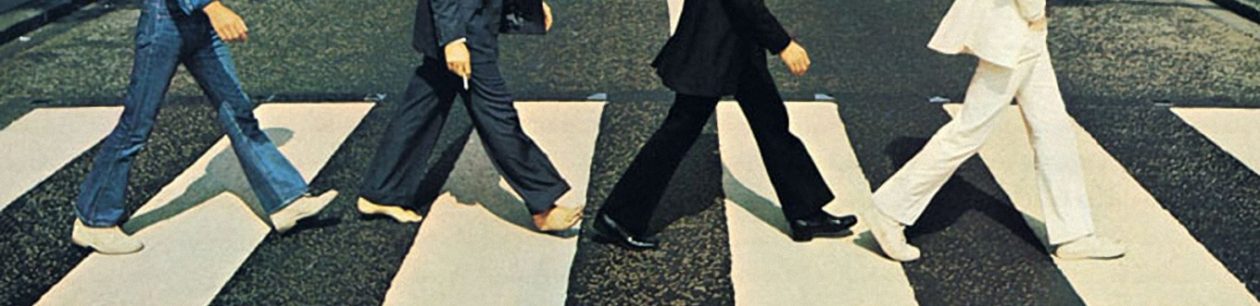
a column by andre salles